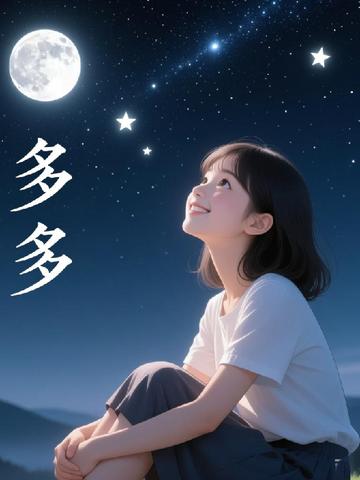
In the empty fields in autumn, a kind of wild chrysanthemum will bloom quietly.
They grow on the edges of fields, on barren slopes, and in the cracks of gravel. Their stems are thin but straight, and their petals are thin but golden. No one cares about their growth, just like few people look down and see the cracks in the soil, and how the dew condenses and breaks on the grass blades.
In this novel, I want you to see such a wild chrysanthemum.
Her name is Duoduo, she is ten years old and lives in Hujian Town - a place whose name you may have never heard. Her world is small: the six-mile long road to school, the faded red brick classroom, the bumpy ruts made by her grandfather's tricycle on the dirt road, and her grandma's eyes red from the firewood in front of the stove.
Her world is so big: so big that it can contain the longing for her distant father, the vague memories of her strange mother, her imagination of the "outside", and the dreams that quietly sprouted in an exercise book with a starry sky cover.
This is not a saga, no earth-shattering twists, no dramatic redemption. It is just some trivial daily life: not enough money for the autumn outing, the neat handwriting on the composition book, the plastic bottles picked up at the market, the brief hug from my father when he came home, and the unheard crying under the moonlight.
But it is in these trivial matters that a child completes her initial growth.
She learned to count dignity in scarcity, understand love in separation, and accumulate the courage to speak out in silence. She is like the autumn grasshopper on the field ridge. Even though she knows that winter is coming, she still uses all her strength to jump to the highest place within her reach.
In the vast countryside of China, there are countless "Duoduo"