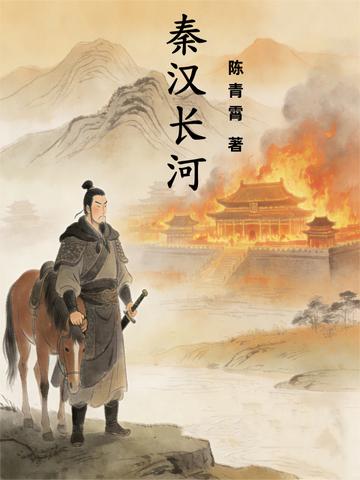
The fall of a dynasty must have profound historical background and practical contradictions. "Its rise is rapid, and its demise is sudden." This sentence is more suitable to describe the decline of Qin and the rise of Han.
In 210 BC, the first emperor of Qin died in Pingyuanjin, Dezhou, Shandong. His youngest son Hu Hai succeeded to the throne as the second emperor of Qin under the conspiracy of Zhao Gao and Li Si.
Zhao Gao was born in a eunuch's family, with a miserable life experience and twisted psychology. He constantly instigated Qin II to indulge in pleasure, eliminate dissidents, kill his subjects, and implement cruel rule over the world, which finally triggered a large-scale uprising.
Due to the low combat effectiveness of the rebel army, the princes formed separate formations and were successively suppressed by the Qin Dynasty general Zhang Han. At this time, Xiang Yu and Liu Bang gradually stood out and stepped onto the stage of history.
After Xiang Yu led the main force of the Chu army to overthrow the Qin Dynasty, he began to enfeoff the princes, which caused the world to fall apart again. The princes invaded and annexed each other, and finally formed a pattern of Chu and Han competing for supremacy.
Xiang Yu has unparalleled martial arts skills and is the leader of the world. However, he is strong and arrogant, narrow-minded, jealous of evil, cruel and unpopular, and his strength gradually turns from strong to weak.
Although Liu Bang was weak and suffered repeated defeats against Xiang Yu, he was clever and deceitful, knew how to use people well, and was kind to the people. Talents from all over the world defected to his command, and he became popular among the people, and his strength gradually turned from weak to strong.
The two sides fought for several years in the Central Plains, and finally fought in Gaixia. With the direct participation of the 400,000 Qi army led by Han Xin, Liu Bang defeated Xiang Yu in one fell swoop and became the final winner.