When the winds of Chaoge lifted the curtains of the Nüwa Temple and thunder from Mount Yan bore aloft newly born wings, a game of chess between humans, gods, and demons quietly began in the twilight of the Shang and Zhou dynasties. Poems of the Investiture of the Gods breaks free from the traditional framework of tales about gods and demons. It unravels the riddles of fate through a modular modern structure and touches the texture of human nature with poetic imagery, breathing fresh life into a three-thousand-year-old legend that speaks directly to the present.
It rejects linear storytelling, centering its conflicts on the struggle over the boundary between gods and humans, the tug-of-war between family bonds and political intrigue, and the entanglement of rebellion and destiny. Each conflict stands on its own, yet all are linked by the hidden thread of “Heaven’s Mandate.” The result suits fragmented reading habits while preserving the story’s integrity. The prose avoids imitating classical Chinese, instead using vivid metaphors such as “the Wine Pool and Meat Forest softened the bones of loyal ministers” and “Ji Chang carved out two thousand five hundred and fifty-five shafts of moonlight” to give traditional imagery a modern texture. Poetry is woven throughout to distill emotion, creating a dual mode of expression through narrative and verse.
The story breaks away from flat, black-and-white characterization. King Zhou is a “lonely man in the clouds,” with a hunger for power that conceals his lack of it. Daji is a “silent figure in the storm,” her bewitching ways masking the burden of Heaven’s Mandate. Jiang Ziya is a “mortal undergoing tribulation,” his long wait concealing both uncertainty and resolve. This exploration of the gray areas of human nature gives the characters an emotional core that resonates with readers today.
It turns out that the Investiture of the Gods was never merely a show starring gods and demons. It was humanity’s grand breakout from the chessboard of destiny. Tenderness beneath armor, steadfastness in the face of despair: after three thousand years of wind and rain, they still touch the softest places in our hearts.
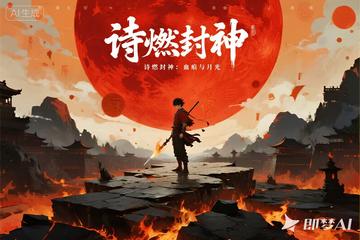



A unique poetic novel that sees a different kind of apotheosis of gods and the human nature stripped away from divinity.