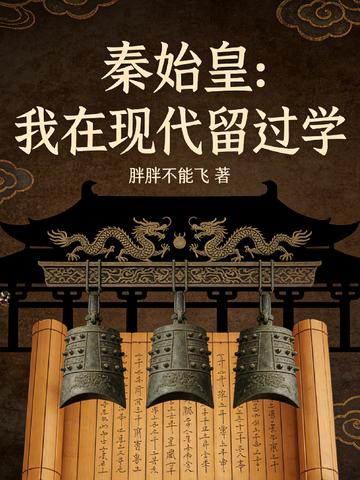
In 210 BC, the First Emperor passed away, and a little bit of his true spirit traveled through time and space and awakened in the bodies of modern children. Fifteen years later, having become a top scholar, he was unexpectedly reborn at an archaeological site - back to 246 BC, the day he first ascended the throne at the age of thirteen.
Above the court, Lu Buwei's power is overwhelming, Lao Ai is ready to make a move, and the six countries are watching. The young King Qin lowered his eyes, but there was a smile on his lips that only he knew. In this life, what he wants is no longer just six kings and one in the world.
The soul from the future carries a knowledge pedigree spanning thousands of years: systems engineering, game logic, basic scientific principles... He will use the language and craftsmanship understandable in the Warring States Period to reshape the trajectory of civilization. Standardization goes beyond train tracks and goes deep into every aspect of production; papermaking was invented ahead of schedule and became the wings of ideas and government orders; iron plows and canal networks made Guanzhong the world's granary.
Li Si, Wang Jian, Meng Tian... Those familiar heroes will gather under a grander blueprint. The soldiers of the Great Qin Dynasty pointed not only at the capitals of the six kingdoms, but also at the Mobei grasslands, the Lingnan miasma, the yellow sands of the Western Regions, and even the vaster territories beyond the blue waves.
This is a perfect fusion of modern thinking and ancient emperors. See how Qin Shihuang used history as a mirror and science as a ruler to carve the rule of law, infrastructure, and standardization into China's genes, and finally let the black flag of the Qin Dynasty fly to unimagined distances.