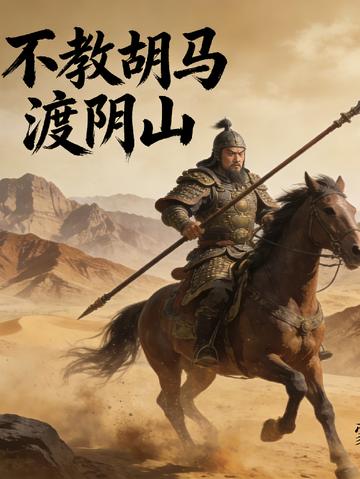
"Don't Teach Huma Crossing the Yinshan Mountains" takes the situation in Northern Xinjiang spanning from the pre-Qin to the Ming and Qing Dynasties as a picture, connecting the legendary lives of famous generals such as King Zhao Wuling, Meng Tian, Wei Qing, Huo Qubing, Li Jing, Xue Rengui, Xu Da, Lan Yu, Sarhuda and his son, and unfolding an epic of the collision and blending of the civilization of the Central Plains and the nomadic forces of the Northern Xinjiang.
From Zhao Wuling's innovative courage in riding and shooting in Hufu, to Meng Tian's millennium foundation of building the Great Wall and the Straight Road; from Wei Qing's surprise attack on Dragon City to break the situation, to Huo Qubing's youthful spirit of wolf living in Xu Mountain to worship heaven; from Li Jing's wise and brave night attack on Yinshan to capture the Khan, to Xue Rengui's three arrows to fix Tianshan. To Xu Da's iron blood to regain Yanyun, to Lan Yuyuer's determination to burn the royal court, and finally to the sincerity of Sarhuda and his son to guard Longjiang - they either strengthened the army through reform, or defended the land with iron blood, or settled the border with benevolence, and wrote the oath of "not giving up an inch of land" in the snowy northern frontier.
The novel not only reproduces the battlefield battles between Jin Ge and Iron Horse, but also depicts the choices made by famous generals between their country and individuals, war and people's livelihood. In the torrent of history, it asks: What is the real "not teaching Hu Ma to cross the Yin Mountain"? It is the coldness and hardness of the masonry of the Great Wall, the edge of the general's sword, and the eternal protection of the peace of their homeland that has never been extinguished in the blood of generations of native defenders.