Traveling through the end of Han Dynasty, I chose to be a werewolf - a werewolf who was more of a ruthless person.
Others travel through time and recruit Zhao Yun and Zhuge Liang, but I specialize in "dangerous goods" like Lu Bu and Jia Xu; others recruit soap glass, but I only recruit military meritorious officials and ninth-grade Zhongzheng; others fall in love and love each other deeply, and I sleep in separate rooms on the second day of a political marriage.
Because I know: the Yellow Turbans will be in chaos in 184, Dong Zhuo will come in 189, and Chibi will be burned in 208.
But I know better: how to lay the plot to kill Dong in 178, how to steal Huangfu Song's first achievement in 184, and how to leave a way out before the fire in Chibi.
"My lord, Liu Bei is crying again." "Let him cry. After crying, he has to go and fight for Xuzhou from Lu Bu."
"Your Majesty, Sun Quan has proclaimed himself emperor." "Well done, Zhengchou has no excuse to pacify Jiangdong."
"Taizu, the historian asked you whether you felt guilty when you usurped the throne?" "Guilty? I killed three million less people."
This is a thoroughly utilitarian epic of struggle for hegemony: there is no moral dilemma, only cost accounting; there is no love between children, only the arithmetic of power. The protagonist's ultimate golden finger is not to predict history, but to use modern people's overall vision to execute the most extreme power game in the feudal era.
Reader comments
Among the plethora of Three Kingdoms travel stories on the Internet, "Wolf Minister of the Late Han Dynasty" is a rare "official history to Machiavellian epic". It abandons the sense of cheapness and pleasure, and digs deeply into the underlying rules, class conflicts, and institutional innovations of troubled times. The protagonist is established well, the long-term foreshadowing is complete, and the character endings are not forced to be happy. There are battle deaths, rebellions, and liquidations, which fits the cruel background of troubled times.
If the timeline confusion is corrected when filling in the plot later, exclusive high-profile scenes are added to the core civil and military affairs, and the details of external expansion after unification and court games in the later years are enriched, it has a chance to become a benchmark full-length masterpiece on the theme of time travel in the late Han Dynasty.
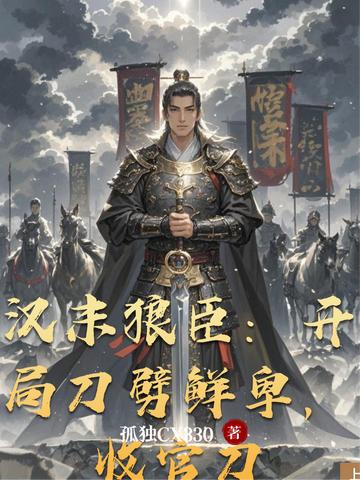
Among the plethora of Three Kingdoms travel stories on the Internet, "Wolf Minister of the Late Han Dynasty" is a rare "official history to Machiavellian epic". It abandons the sense of cheapness and pleasure, and digs deeply into the underlying rules, class conflicts, and institutional innovations of troubled times. The protagonist is established well, the long-term foreshadowing is complete, and the character endings are not forced to be happy. There are battle deaths, rebellions, and liquidations, which fits the cruel background of troubled times. If the timeline confusion is corrected when filling in the plot later, exclusive high-profile scenes are added to the core civil and military affairs, and the details of external expansion after unification and court games in the later years are enriched, it has a chance to become a benchmark full-length masterpiece on the theme of time travel in the late Han Dynasty.