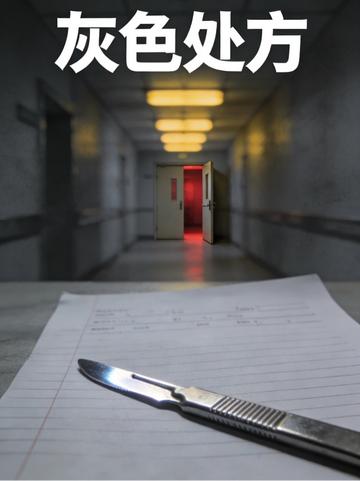
A prescription can prescribe not only medicine, but also the entire price of human nature at the intersection of light and darkness.
Medical representative Lin Yi's original intention to enter the industry was to save his younger brother's life. Faced with sky-high medical expenses, he had no choice. Instructor Zhao Lei gave him the first lesson: the thickness of the envelope determines the order of drugs on the prescription. When he exchanged the bonus for his sister's life-sustaining medicine, he found that the code name on the infusion bag was exactly the one he tried so hard to promote.
He quickly learned the rules. In large hospitals, academic sponsorship is an elegant cloak of cash; in chain pharmacies, high-margin drugs are always placed in the most conspicuous position; in small clinics struggling to survive, there is only a line of code between expired injections and new drug labels. Lin Yi was like a fish in water, from a struggling conscience to a well-lubricated cog in the system. He told himself that medicine would always cure the disease, and the method did not matter.
Until a serious adverse drug reaction broke out in a clinic he maintained. The child lying in the emergency room was treated with the same new antibiotics that he had strongly recommended last month for performance reasons and had tacitly approved some "flexible operations". The patients' groans of pain coincided with the company's phone calling for "urgent public relations".
At the same time, reporter Lu Wei, who had been secretly investigating the shady industry, put a piece of fatal evidence in front of him - that was the key link to the accident. The doctor Chen Jin, who has always been alone in the system, issued an ultimatum to him: "Every silence you make is a prescription for the next accident."
On the one hand, it is a complete expose, which means that he has tried his best to build medical resources for his younger brother and a job for everyone.