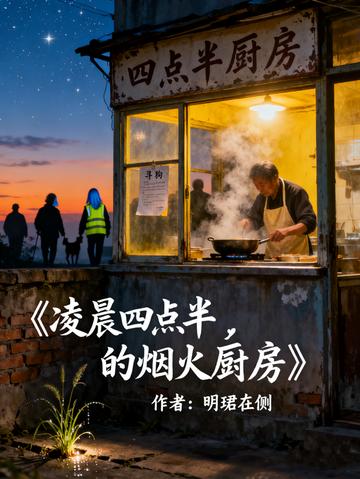
When the countdown to life entered, 65-year-old Lin Shouyi did not choose to lie in the hospital bed and wait for the end. He opened a small shop in the back alley of the hospital that was only open from 4:30 to 6 in the morning. Every day, he lights up the city's quietest moments with a fire, serving a bowl of hot soup and a plate of fried rice to sanitation workers, emergency nurses, homeless people, and insomniacs.
Here, a mother who was overwhelmed by online loans had a hot meal for the first time, a programmer who wanted a divorce reunited with his wife on a rainy night, a rebellious girl learned to bake cakes for her father, and a dying patient tasted the last "taste of mother" in his life. Food becomes a ferry, carrying people through their respective dark nights.
Lin Shouyi calmly prepared for his death, divided his savings into one hundred parts, and wrote in his will: "After I leave, please continue to provide hot meals for night walkers." He knew that death is as natural as the stove fire extinguishing, and the important thing is the temperature when burning. When the morning light comes on, the goodwill in the shop has spread like sparks - it turns out that the bravest way to face death is to live seriously until the last moment and light a lamp in the remaining warmth.
Core significance: This book does not explore how to defeat death, but how to reconcile with limited life. Through the most ordinary daily fireworks, it demonstrates a kind of survival wisdom of "living toward death" - only when we are no longer afraid of the end can we truly savor every moment.