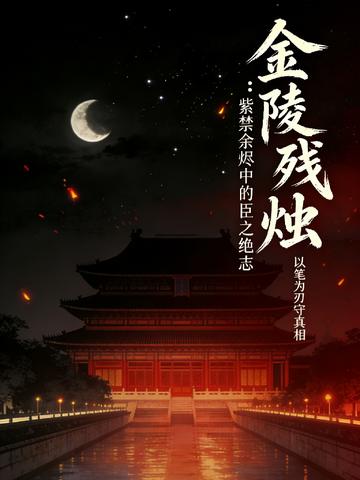
In 1645, the reverberations of Chongzhen's suicide still lingered, and the lights of Nanjing's Ming Palace were still swaying in a state of ecstasy. Emperor Hongguang was obsessed with the draft, and Ma Shiying, Qian Qianyi and others pursued their own interests and used the four towns in Jiangbei and the safety of the people as bargaining chips. Only the blood on the city walls of Yangzhou and the perseverance in the alleys of Jiangyin sustained a trace of strength in the troubled times.
Chen Wang, a minor official in the Ministry of Rites, glimpsed the urgent and bloody documents of Yangzhou in the archives, and saw the decay of the dynasty in the tragic situation of the refugees. Using pen and ink as a blade, under the pressure of the Manchu Dynasty and the iron hooves of the Qing army, he quietly wrote "Nandu Sights and Sounds", recording the absurdity of the court, the brutal massacre of the city, and the unyielding people. Shen Qingyuan accompanied him with his strength, and Zhou Laoli spent the rest of his life protecting each other. In the desperate situation of Nanjing's collapse, the three of them took over to protect this "testimony of the soul", fighting with their lives against the oppression of "shaving their hair and changing clothes", and answering the question of "where is their integrity" with their perseverance.
When the flowing water of the Qinhuai River swallowed up the figures of the martyrs, and when the Nanjing palace was reduced to ruins, the manuscripts hidden in the wall were quietly circulated in the darkness of the shaved heads and clothes like the dim light of a candle. The dynasty can be destroyed, but the memory will never be destroyed; the land can be lost, but the integrity will last forever. This is the last song left by the little man for the Ming Dynasty and civilization in the torrent of the times.