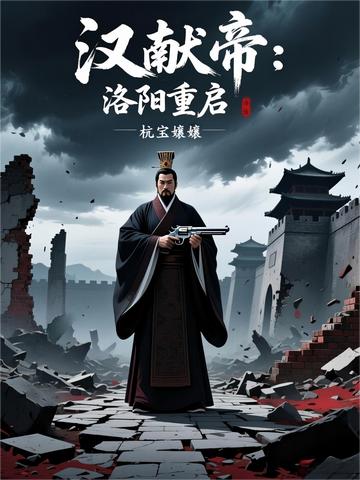
I transmigrated into Liu Xie, Emperor Xian of Han, on the day I arrived at the ruins of Luoyang.
The Luoyang before me was no imperial capital. It was a graveyard. Crumbling walls gnawed at the sky, weeds pushed through the cracks in the jade steps, and the wind carried not the music of bells and ritual vessels, but the sobs of starving refugees and the harsh cries of crows. The history books turned their cold pages in my mind: before long, Cao Cao’s troops would “escort” me to Xuchang, place the imperial jade seal in my hands, and begin my thirty-year life of supposed honor that was, in truth, a prisoner’s existence.
But that was not my script.
Since fate had woken me here and now, I would carve a way out from this desperate starting point. My dragon robe might be tattered, but I was still the Son of Heaven. My capital might be ruined, but Luoyang was still where the hearts of the realm’s people lay. I would use what remained of my moral authority to weave a net, turning loyal ministers’ devotion, refugees’ will to survive, and even the warlords’ fragile suspicions into threads I could put to use. Food, people’s hearts, swords: I had to weigh every one of them carefully.
What I rebuilt was more than a palace. It was a signal, a beacon telling the realm that “the Han dynasty is not dead, and the emperor can still make a difference.”
Then a scout reported that Cao Mengde’s banners were already visible in the distance. In the past, he would have found a frightened boy waiting to be slaughtered. Today, he would face an emperor who had found his footing again among the ruins.
In his game of strategy, “upholding the emperor” was his masterstroke.
But on my board, Luoyang had already made the first move that could change the game.
The course of the realm had to be calculated anew.