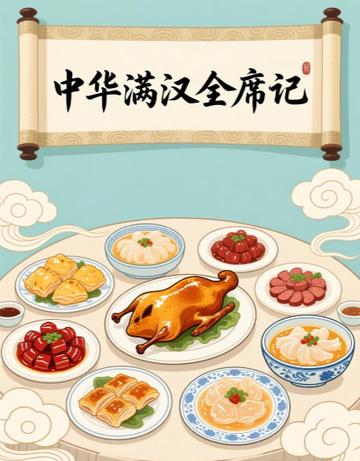
Introduction to Chinese Cuisine
Chinese cuisine is an epic written in the five flavors, a living art and philosophy spanning millennia. Rooted in the vast and varied landscapes of China, it has shaped a map of taste: rice in the south, noodles in the north, sweetness in the east, and heat in the west. Over the course of history, it has developed into the Eight Great Cuisines: Shandong, Sichuan, Cantonese, Jiangsu, Fujian, Zhejiang, Hunan, and Anhui, each with its own character. Sichuan and Hunan cuisine are bold and fiery, Huaiyang cuisine is delicate and refined, Cantonese cuisine celebrates the fresh, natural flavors of its ingredients, and Shandong cuisine is rich and dignified.
At its heart is the pursuit of harmony: balancing the five flavors to achieve a sense of taste; treating food and medicine as one, with careful attention to the connection between diet and health; and eating foods in their proper season, a wisdom rooted in following nature's rhythms. In the kitchen, dozens of techniques, including stir-frying, flash-frying, quick-frying, steaming, and stewing, combine with precise control of heat to bring ingredients to life.
These flavors belong as much to the elaborate rituals of the imperial court as to the everyday bustle of ordinary streets and alleyways. They connect seasonal festivals and the milestones of life, carrying a nation's cultural memory, regional character, and deep human warmth in the most simple and direct way. To taste Chinese cuisine is to embark on a pilgrimage of flavor, delving into the very heart of Chinese civilization.