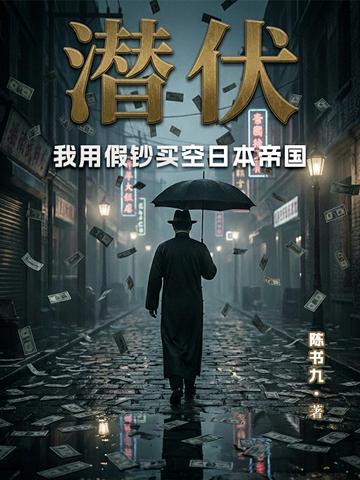
"Colonel, the sound of this money is wrong. The paper pulp is not awake yet, it is too angry."
1939, Execution Ground No. 76, Jisi Feier Road, Shanghai.
Facing the black muzzle of the special high school class, Gu Weijun, a death row prisoner, endured the severe pain of his fingers being tortured, closed his eyes and flicked the counterfeit money in his hand.
This bullet turned him from a mortal bullet to a "living god of wealth" in the eyes of the Japanese army.
He is the descendant of Jiangnan's "Gu's Gold Stone" and a pair of black market "white gloves" who use ghost hands to repair national treasures.
In order to hide in hiding, he willingly became a traitor painter, which was criticized by thousands of people. He was expelled from the family tree and despised by the people of the country.
In No. 76, He was submissive, suffered from stomach problems, and was a technical nerd who allowed others to bully him;
In the dark, he decides life and death, and is the "judge" behind the scenes who controls the fate of counterfeit banknotes.
There is no system, no plug-ins, no brothers around, just a mute apprentice and a grasshopper spending the winter.
Alone, he dances among wolves.
During the day, he printed counterfeit money for the Japanese and plundered the wealth of the occupied areas;
Late at night, he mixed photosensitizers into ink, cultured paper-loving mold in paper pulp, and carved Morse code into the shading.
Taking advantage of the greed of the Japanese, he set up a shocking "Ponzi scheme" and used waste paper to buy up the empire's penicillin and gold.
It was not until 1945, when the invaders retreated, that they discovered that the wealth they had looted was nothing more than a dream.
And Gu Weijun has already turned the backbone of the Chinese people into dark plum blossom patterns that are difficult to discern with the naked eye and carved them into every counterfeit banknote.
When autumn comes on September 8th, I will kill all the flowers after they bloom.