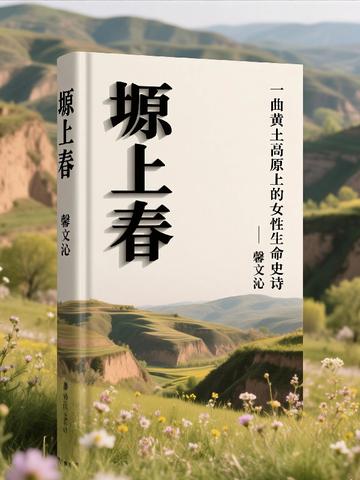
An epic of female awakening on the Loess Plateau, with blood and tears watering her own good years.
On the northwest plateau in the 1980s, Chun'e's marriage was like an old spinning wheel, teetering on the creak of "must have a boy". After the baby girl was aborted and the man was born, her husband turned around and headed south, leaving her with only a cold birth control ring and a home that was crushing her spine.
Her suffering was the endless blood washed away by the well, the silent shouts sewn into her red coat late at night, and the countless walks to the health center alone on the mountain road. Her pain resonated with the trembling of the Wang family's daughter-in-law when she had a miscarriage, and was captured by the midwife Wang Gu's cloudy eyes - this was the common fate of a whole generation of women in the original land.
However, there is life in the darkest corners of cave dwellings.
The medicinal residue buried under the stove ashes fermented quietly under the wolfberry roots. A pair of silver earrings fell into the wild chrysanthemum bushes to witness silently. The pine branch pattern embroidered on the inner skirt of the clothes spread stubbornly. In the driest land, women use their silent resilience to guard thoughts that cannot be tolerated in the world.
Until that dusk when the wheat waves melt into gold, the last sheaf of wheat returns to the warehouse, and the man who went south finally returns. Chun'e stood in the hot dusk, holding in her hands not only food, but also her half-life choice tempered by blood and tears.
Suffering never leaves, but hope has taken root and grown.
Just like the wild wolfberry tree on the edge of the plateau, it bears the most dazzling red fruits in the coldest wind.
This is not only the suffering history of women, but also a solemn declaration of life.
——"Spring on the Plateau" has begun, inviting you to witness how deafening life can be under a wasteland.
Reader comments
"Spring on the Plains" is not only a story, but also the common memory and heartbeat of a generation. On this loess plateau, which is wrinkled by wind and sand, I tell this story to unravel the fate of those deeply buried women——
She is not someone's appendage
From being forced to have a miscarriage to supporting the family alone, Chun'e stepped on the thorns of the times and concepts every step she took. Her pain is the epitome of thousands of "hers".
In silence, there is also thunder
When medicine residue seeps into the soil, silver jewelry is hidden in the flowers, and pine branches are embroidered into the skirts of clothes... These hidden "resistances" are more shocking than any cry.
In the end, she harvested her "life" with her own hands
At dusk when the wheat waves rolled, what she held tightly was not only the grain, but also a woman's declaration to take back her life - this was by no means a sad drama, but the most solemn crowning of life.
If you have ever cried for "Alive" and been moved by "The Ordinary World", then this book will take you deep into the loess and hear the tenacious heartbeats that have never been buried by the wind and sand.
Dedicated to all those who silently grow into big trees in the wilderness.
This novel is super beautiful. The author has a profound cultural background. Chun'e is portrayed in a real and vivid way. The story is vivid and down-to-earth. It is fascinating and seems to be back to the days of family planning in the 1960s and 1970s. Chun'e is the epitome of millions of rural women! ! !
The story is exciting and down to earth.
This novel is very well written and very down-to-earth. I read it every morning and evening. I hope the author can update it faster. I really want to read it in one go. [Like] [Love]
Another story describing the suffering of women in the northwest!





"Spring on the Plains" is not only a story, but also the common memory and heartbeat of a generation. On this loess plateau, which is wrinkled by wind and sand, I tell this story to unravel the fate of those deeply buried women—— She is not someone's appendage From being forced to have a miscarriage to supporting the family alone, Chun'e stepped on the thorns of the times and concepts every step she took. Her pain is the epitome of thousands of "hers". In silence, there is also thunder When medicine residue seeps into the soil, silver jewelry is hidden in the flowers, and pine branches are embroidered into the skirts of clothes... These hidden "resistances" are more shocking than any cry. In the end, she harvested her "life" with her own hands At dusk when the wheat waves rolled, what she held tightly was not only the grain, but also a woman's declaration to take back her life - this was by no means a sad drama, but the most solemn crowning of life. If you have ever cried for "Alive" and been moved by "The Ordinary World", then this book will take you deep into the loess and hear the tenacious heartbeats that have never been buried by the wind and sand. Dedicated to all those who silently grow into big trees in the wilderness.
This novel is super beautiful. The author has a profound cultural background. Chun'e is portrayed in a real and vivid way. The story is vivid and down-to-earth. It is fascinating and seems to be back to the days of family planning in the 1960s and 1970s. Chun'e is the epitome of millions of rural women! ! !
The story is exciting and down to earth.
This novel is very well written and very down-to-earth. I read it every morning and evening. I hope the author can update it faster. I really want to read it in one go. [Like] [Love]
Another story describing the suffering of women in the northwest!