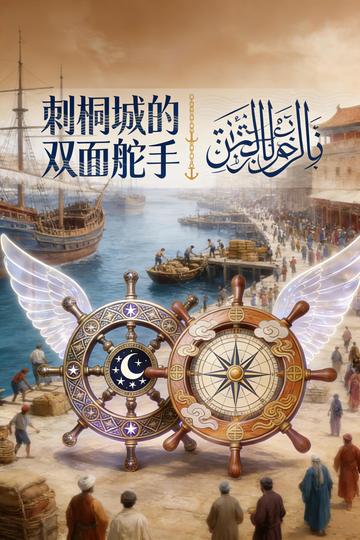
At the end of the Southern Song Dynasty, Citong Port (Quanzhou) stood at the top of world trade. Amidst the competition of thousands of sails, the civilizations of Tibetan and Han Dynasties blended and coexisted, and there was also the undercurrent of the storm of the collapse of the dynasty. Pu Shougeng, a descendant of Arab Tibetan merchants, migrated here with his family, shouldering the mission of ethnic group survival, and embarked on a magnificent journey of "double-sided helmsmanship" - he was not only the son of the ethnic group who adhered to the faith and maintained the connection of Fanfang, but also a Han Chinese student who delved into Confucian classics and sailed lucky ships;
When they first arrived in the port city, the Pu family was monopolized and strangled by the Lin clan. Customs clearance and extortion, government agencies were framed, and pirates intercepted ships one after another. Under the guidance of Han scholars, the young Pu Shougeng searched among Confucian classics and sea charts, and transformed from a young boy into the core of gathering the strength of Tibetan and merchants and coordinating the contradictions between Tibetan and Han Dynasties.
The Yuan army's cavalry went south, and the torrent of the Song and Yuan changes swept through Citong. Pu Shougeng used "neutrality" as his rudder, guarding the fire of Tibetan merchants in the cracks of the dynasty, maintaining the trade network of the port city, and allowing the evening prayers in the mosque and the sound of books in private schools to still resonate in the smoke of war.
This is an epic engraved with the times and personal destiny. It takes the grand history of the Song and Yuan Dynasties as its volume, and outlines the legend of Pu Shougeng in the troubled times in Citong Port, where civilizations blended together, steering the rudder of existence and bridging the path of civilization.