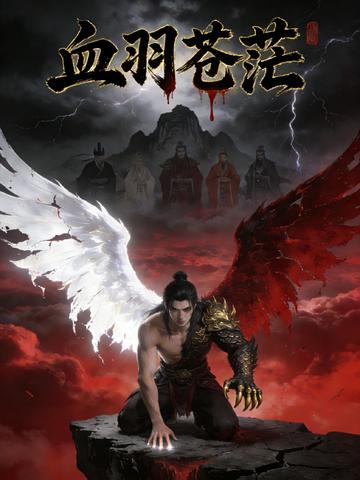
Born into the world bearing the brand of "Devil", Ren Tianyu's childhood was filled with the pain of the seal and the mud at the foot of the mountain. Until the flames burned away the last warmth, the wolves in the deep forest gave him fangs. Yaowanggu's compassion illuminated him, and also attracted the covetousness and encirclement of the entire "right path".
In the desperate situation, the ancient bloodline completely awakened, and the divine radiance and bloodthirsty beastliness intertwined crazily in his body. The person he trusted showed his usurping fangs in a blink of an eye, and the sect that he swore to protect to the death was in danger because of him.
From the spurned "waste fish" to the hunted "god descendant", will this heaven-defying road paved with blood feathers fall into the boundless demonic realm, or will the divine fire be rekindled in the ashes?
With a thought of gods and demons, Xue Yu asked the sky.
Reader comments
Within the male-dominated martial arts fantasy framework, the female characters in "Blood Feathers" are by no means embellishments, but the key force that drives the plot and carries the theme, and each has its own unique style. Cui'er Niang is the embodiment of maternal glory, and her kindness and sacrifice are the starting point of Ren Tianyu's humanity; Lin's image is more complex and mysterious. She is not only a "crazy wife" who needs to be saved in the traditional sense, but also the key to hiding the memory of the ancient bloodline, and the relationship between her waking and sleeping. The secret that connects the entire world; Su Ling'er represents the power of the new generation. She not only inherits the medical skills and benevolence of Yaowang Valley, but also grows rapidly in the ordeal, transforming from a protected person to a partner who can fight side by side with the protagonist. Her Yaowang bloodline becomes the key to balance the violent power of the protagonist. The emotional power carried by these female characters - maternal love, husband-wife love, companionship - constitute the warmest and most solid background in the story. They are the anchor points that pull Ren Tianyu back again and again on the edge of depravity. The work proves through them that in the cold world of power and hatred, the warmth and wisdom derived from emotion are the ultimate salvation.
The artistic charm of this novel largely stems from its ubiquitous and extreme contrasting techniques throughout. Environmentally, the oppressive rainstorm and thunder in the Ren Family Courtyard contrasts with the tranquility of Yaowang Valley; the cold and deathly silence of the Northern Xinjiang Icefield contrasts with the mysterious beauty of the underground ice palace. In terms of the fate of the characters, Ren Tianyu has a distinguished background but has been a fool since childhood, Ling Xuzi looks like a fairy but is actually a snake at heart, and Lin is dazed on the surface but hides deep ancient wisdom. This duplicity setting constantly creates cognitive reversals. The core is the contrast in the nature of power: the sacred "power of divine feathers" and the ferocious "animal inner elixir" are fighting in the protagonist's body; the original intention of the contract of "protection" and the desire for power of "predation" confront each other in history and reality. These strong contrasts not only constitute full dramatic tension, keep the plot always tense, but also deepen the theme - it is in the fierce tearing of light and shadow, good and evil, order and chaos that the choices made by the characters increasingly demonstrate their weight and brilliance.
Among the many works of Tomato Novels, "Blood Feathers in the Vast" has successfully created a passionate legend with great tension with its unique "start low and go high" style opening and gradually unfolding grand narrative. The author does not rush to throw out dazzling settings, but slowly unfolds the mystery of the blood feather carried by the protagonist. In the seemingly ordinary revenge narrative, he reveals a magnificent picture about blood, fate and the order of heaven and earth.
The core charm of the novel lies first in its highly immersive world-building. "Blood Feather" is not only the source of power, but also a symbol of curse and mission. This setting cleverly connects personal destiny and world affairs. The protagonist's growth trajectory breaks away from simple upgrade routines. Every breakthrough is accompanied by a subversion of self-perception and a deeper understanding of the truth of the world. The supporting characters also have their own flesh and blood. Their choices and betrayals, loyalty and sacrifices together weave a complex network of human nature.
In terms of narrative rhythm, the work balances dense battle scenes with necessary emotional precipitation. The excitement of the sect competition, the treacherousness of the secret exploration, and the thrilling power game are all depicted in a very graphic way. What is slightly lacking is that some villains are slightly stereotyped and some turns are a bit hasty, but these are not hidden in the face of the overall smooth narrative and continuous suspense.
"Blood Feather Vast" goes beyond the simple narrative framework of "blood debt and blood payment" and weaves Ren Tianyu's journey of revenge into a grand proposition about redemption and mission. His hatred was not groundless - his family abandoned him, his adoptive mother died tragically, and his teacher suffered misfortune. Every stroke was filled with blood and tears. However, the author skillfully sublimates this personal hatred into a responsibility to fight against a historical conspiracy that spans eight hundred years. Ren Tianyu's pursuit of power is not only to kill his enemies, but also to break the fateful cycle of "Shenyu bloodline" being stigmatized and plundered. When he finally faced Ling Yue in the Ice Palace and understood why power fell and how alliances collapsed, his personal grudges merged with the grand mission of correcting historical mistakes. This kind of treatment is extremely profound: revenge is no longer just destruction, but also a difficult reconstruction - rebuilding the distorted truth, rebuilding the broken covenant, and rebuilding one's own heart burned by hatred. In this way, the work explores the limits of hatred and the possibility of transcending hatred.
This is a book written with care. I hope everyone will use their fingers to like it and give it high marks.


Within the male-dominated martial arts fantasy framework, the female characters in "Blood Feathers" are by no means embellishments, but the key force that drives the plot and carries the theme, and each has its own unique style. Cui'er Niang is the embodiment of maternal glory, and her kindness and sacrifice are the starting point of Ren Tianyu's humanity; Lin's image is more complex and mysterious. She is not only a "crazy wife" who needs to be saved in the traditional sense, but also the key to hiding the memory of the ancient bloodline, and the relationship between her waking and sleeping. The secret that connects the entire world; Su Ling'er represents the power of the new generation. She not only inherits the medical skills and benevolence of Yaowang Valley, but also grows rapidly in the ordeal, transforming from a protected person to a partner who can fight side by side with the protagonist. Her Yaowang bloodline becomes the key to balance the violent power of the protagonist. The emotional power carried by these female characters - maternal love, husband-wife love, companionship - constitute the warmest and most solid background in the story. They are the anchor points that pull Ren Tianyu back again and again on the edge of depravity. The work proves through them that in the cold world of power and hatred, the warmth and wisdom derived from emotion are the ultimate salvation.
The artistic charm of this novel largely stems from its ubiquitous and extreme contrasting techniques throughout. Environmentally, the oppressive rainstorm and thunder in the Ren Family Courtyard contrasts with the tranquility of Yaowang Valley; the cold and deathly silence of the Northern Xinjiang Icefield contrasts with the mysterious beauty of the underground ice palace. In terms of the fate of the characters, Ren Tianyu has a distinguished background but has been a fool since childhood, Ling Xuzi looks like a fairy but is actually a snake at heart, and Lin is dazed on the surface but hides deep ancient wisdom. This duplicity setting constantly creates cognitive reversals. The core is the contrast in the nature of power: the sacred "power of divine feathers" and the ferocious "animal inner elixir" are fighting in the protagonist's body; the original intention of the contract of "protection" and the desire for power of "predation" confront each other in history and reality. These strong contrasts not only constitute full dramatic tension, keep the plot always tense, but also deepen the theme - it is in the fierce tearing of light and shadow, good and evil, order and chaos that the choices made by the characters increasingly demonstrate their weight and brilliance.
Among the many works of Tomato Novels, "Blood Feathers in the Vast" has successfully created a passionate legend with great tension with its unique "start low and go high" style opening and gradually unfolding grand narrative. The author does not rush to throw out dazzling settings, but slowly unfolds the mystery of the blood feather carried by the protagonist. In the seemingly ordinary revenge narrative, he reveals a magnificent picture about blood, fate and the order of heaven and earth. The core charm of the novel lies first in its highly immersive world-building. "Blood Feather" is not only the source of power, but also a symbol of curse and mission. This setting cleverly connects personal destiny and world affairs. The protagonist's growth trajectory breaks away from simple upgrade routines. Every breakthrough is accompanied by a subversion of self-perception and a deeper understanding of the truth of the world. The supporting characters also have their own flesh and blood. Their choices and betrayals, loyalty and sacrifices together weave a complex network of human nature. In terms of narrative rhythm, the work balances dense battle scenes with necessary emotional precipitation. The excitement of the sect competition, the treacherousness of the secret exploration, and the thrilling power game are all depicted in a very graphic way. What is slightly lacking is that some villains are slightly stereotyped and some turns are a bit hasty, but these are not hidden in the face of the overall smooth narrative and continuous suspense.
"Blood Feather Vast" goes beyond the simple narrative framework of "blood debt and blood payment" and weaves Ren Tianyu's journey of revenge into a grand proposition about redemption and mission. His hatred was not groundless - his family abandoned him, his adoptive mother died tragically, and his teacher suffered misfortune. Every stroke was filled with blood and tears. However, the author skillfully sublimates this personal hatred into a responsibility to fight against a historical conspiracy that spans eight hundred years. Ren Tianyu's pursuit of power is not only to kill his enemies, but also to break the fateful cycle of "Shenyu bloodline" being stigmatized and plundered. When he finally faced Ling Yue in the Ice Palace and understood why power fell and how alliances collapsed, his personal grudges merged with the grand mission of correcting historical mistakes. This kind of treatment is extremely profound: revenge is no longer just destruction, but also a difficult reconstruction - rebuilding the distorted truth, rebuilding the broken covenant, and rebuilding one's own heart burned by hatred. In this way, the work explores the limits of hatred and the possibility of transcending hatred.
This is a book written with care. I hope everyone will use their fingers to like it and give it high marks.