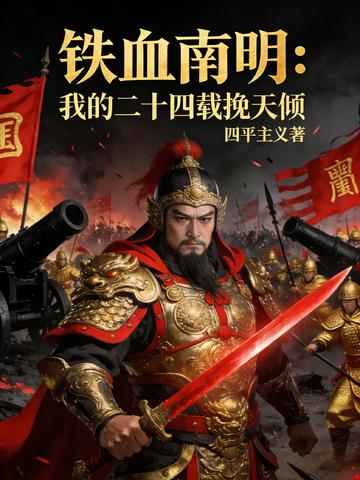
The Southern Ming Dynasty was in crisis, the eunuchs were in rebellion, and the Qing army's cavalry broke through Jiangbei! When the country was in danger, you suppressed the chaos with an iron fist. You brought the Fo Lang machine artillery map to create a powerful army of magic machines, and used the sea to make surprise attacks to break the two-way encirclement. Expedition to the north of Luyu, decisive battle against Zhili, and marching into Liting Liaodong by land and water! The constraints of civil servants and the surveillance of vassal kings are all reduced to dust. Let's see how a supervisory state can turn things around, destroy the Manchu Qing Dynasty, and create a prosperous era of Ming Dynasty!
Reader comments
The author's understanding of the history of the Southern Ming Dynasty is impressive. From the start of the Fengyang Revolution in the 17th year of Chongzhen's reign, to the establishment of the Nanjing regime and internal fighting, to the Qing army's southward struggle with internal warlords, every key node is closely linked to the historical context. However, the author does not simply retell the historical data, but re-examines the choices and costs that have been simplified by history books through the perspective of the protagonist Zhu Changzi.
Ma Shiying's machinations, Shi Kefa's idealism, Ruan Dacheng's literati speculation, and the arrogance and domineering of the four towns in Jiangbei - these historical figures are no longer thin labels, but living individuals with complex motives and situations. The author allows these characters to breathe again on paper through delicate psychological descriptions and dialogues that fit the historical context.
The author's understanding of the history of the Southern Ming Dynasty is impressive. From the start of the Fengyang Revolution in the 17th year of Chongzhen's reign, to the establishment of the Nanjing regime and internal fighting, to the Qing army's southward struggle with internal warlords, every key node is closely linked to the historical context. However, the author does not simply retell the historical data, but re-examines the choices and costs that have been simplified by history books through the perspective of the protagonist Zhu Changzi. Ma Shiying's machinations, Shi Kefa's idealism, Ruan Dacheng's literati speculation, and the arrogance and domineering of the four towns in Jiangbei - these historical figures are no longer thin labels, but living individuals with complex motives and situations. The author allows these characters to breathe again on paper through delicate psychological descriptions and dialogues that fit the historical context.