[Hardcore Historical Reform]+ [Industrial Revolution and Nation-Building]+ [Power Struggles at Court]
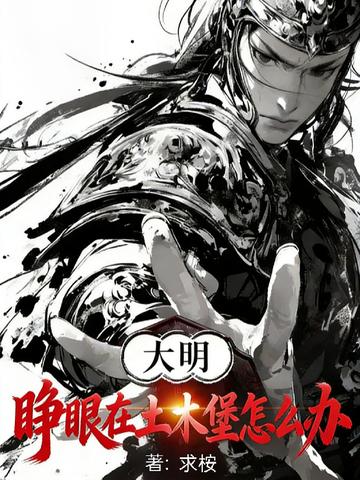
Li Zhe, a history student, died suddenly. When he opened his eyes, he was on the battlefield at Tumu Fortress, having become the Ming emperor Zhu Qizhen, pursued by the cavalry of the Oirat.
The Ming army was in rout before him, Mongol horsemen at his back, and history’s most humiliating fate, being taken captive in the north, already hanging over him.
But in this life, history’s script had to be rewritten.
A dead end was only the beginning of the journey.
Using modern tactics, he rallied the defeated troops and drove Esen back in a bloody battle. Buoyed by this “small victory,” he returned to the Forbidden City. But danger lurked all around the throne: his brother, serving as regent, held immense power; the civil officials watched coldly; the empress dowager remained wary; and the Oirat threatened the frontier.
Imperial authority had to be reforged with iron and fire.
With ruthless resolve, he purged corrupt eunuchs and reformed the capital army, training the first “Imperial Guard” with new firearms. At court, he forged alliances and turned on his rivals, bringing capable officials like Yu Qian into his inner circle and uprooting entrenched interests in the salt trade and grain transport. Every step was taken over the bodies of those who stood to lose, and every policy challenged two centuries of decaying institutions.
But that was not enough.
His gaze reached beyond the palace walls, toward a more distant future. He established the “Institute of Natural Studies” to sow the seeds of science, quietly strengthened the nation through improved industrial processes, and began laying out a vision for maritime trade. He did not want to be a ruler who merely restored the dynasty to strength. He would lead this ancient empire to force open the gates of the Industrial Revolution two centuries early!
“What I want is an empire on which the sun never sets!”