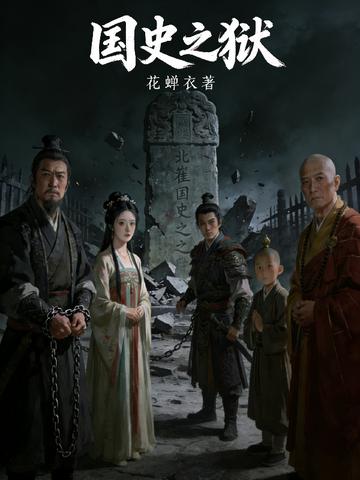
Throughout the long course of Chinese history, the Northern Wei period was an era of upheaval and conflict. Founded by the Xianbei, a minority people, the Northern Wei dynasty underwent a complex process of consolidating its rule and integrating Han culture. Yet this period also saw a tragic political purge known as the Case of the National History. In particular, in the eleventh year of Tai Ping Zhen Jun of the Northern Wei (450 CE), the Han Chinese official Cui Hao, who oversaw the compilation of the national history, wrote candidly about the humiliation suffered by the ancestors of the ruling house. This touched a nerve with the emperor, and Cui Hao was ultimately executed along with his family, which was wiped out. This episode reveals not only the Northern Wei rulers' sensitivity and fear regarding historical facts, but also the cruelty and complexity of the political struggles of the time. This story is based on the historical context of the period. It teaches us that history is a people's memory and a warning for the future. In the face of power's suppression, we should uphold reason and courage, protect the truth of history, and leave future generations a precious spiritual legacy.