He started the most ambitious career from the humblest of origins.
He uses the coldest means to practice the warmest ideals.
Xia Yuanqi, the third son of the Yu Kingdom, was the son of a maid. He was taken as a hostage when he was young. After returning to the country, he lay dormant for ten years. When an assassination opened the curtain of troubled times, he picked up the blood-stained chess piece, used the world as his chess piece, and started a huge gamble that could change his destiny——
He wants to end wars with war and end century-old separatism with an iron fist.
From the mutiny in northern Xinjiang to the bloody battle in Hangu, from the strange plot in Surabaya to the princes of Jiuhe, he walked through mountains of corpses and seas of blood, stitching the broken mountains and rivers into pictures inch by inch.
He also wants to establish a country with laws and lay the foundation for eternity with systems.
Faced with a tangled family, a jealous and plotting brother, and an eyeing neighbor, he joined hands with his adviser Shen Moqing to implement the "Yuanqi Law", abolished feudalism, established prefectures and counties, and built a rule of law empire that did not rely on wise kings.
Around him are gathered the most extraordinary souls of this era:
· The female counselor Su Qingyan, the princess of the subjugated country, presented the "Offensive and Defensive Strategies" to unify the nine states.
· The female general Qin Zhaoyue and the orphan girl at the border guarded the country for him with a sword.
· Female medical officer Lin Shuying, using golden needles to save people also saves the hearts of the world
But on the road to reform, every step is stained with blood and tears:
When his brother handed him the poisoned wine, when his most trusted minister asked him whether "the law is greater or the king is greater", when the woman he loved so much chose to go away from home to fulfill his hegemony... Can this aloof emperor keep his original vow to "stop the war and calm the people" on the top of the dragon throne?
This is an epic about the birth of an institution.
"The country I want to build is not a country where one family has one surname, but a country where the law is enforced and all people uphold it."
——Xia Yuan
Reader comments
"The Unification of Nine Provinces in the Ding Dynasty" takes the turbulent times of the Warring States Period as the scene and writes an epic story of a tripod forged with blood and fire. The protagonist Xia Yuanqi is torn between the ideal of "stopping the war" and the iron-blooded reality. The portraits of Shen Moqing, Lu Xiaotian and other characters are full and profound. The work goes beyond machinations and conquests, and goes deeper into the eternal propositions of rule of law and benevolent governance, change and cost. In the classical and elegant writing style, the feelings of family and country are intertwined with the thinking of civilization, the plot is exquisitely laid out, and the ups and downs of the plot are unforgettable, finally becoming a soul-stirring song of the revolution.
It has a strong sense of history, all major plots have foreshadowing, foreshadowing, and consequences. The characters' motivations and changes are sufficient, and it is antique and worth reading.
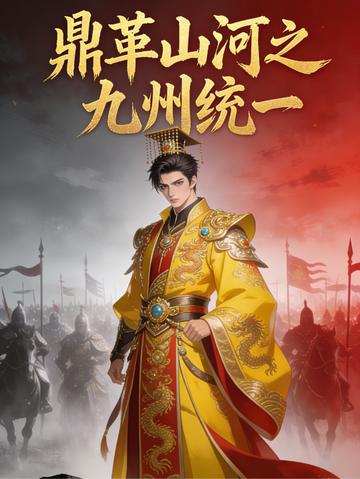
"The Unification of Nine Provinces in the Ding Dynasty" takes the turbulent times of the Warring States Period as the scene and writes an epic story of a tripod forged with blood and fire. The protagonist Xia Yuanqi is torn between the ideal of "stopping the war" and the iron-blooded reality. The portraits of Shen Moqing, Lu Xiaotian and other characters are full and profound. The work goes beyond machinations and conquests, and goes deeper into the eternal propositions of rule of law and benevolent governance, change and cost. In the classical and elegant writing style, the feelings of family and country are intertwined with the thinking of civilization, the plot is exquisitely laid out, and the ups and downs of the plot are unforgettable, finally becoming a soul-stirring song of the revolution.
It has a strong sense of history, all major plots have foreshadowing, foreshadowing, and consequences. The characters' motivations and changes are sufficient, and it is antique and worth reading.