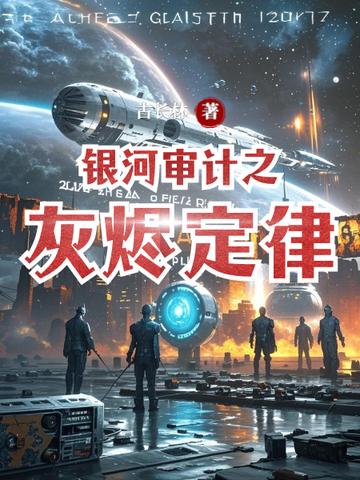
Galactic Audit: The Ashen Law
银河审计之灰烬定律
- Status
- Ongoing
- Length
- 328k Words
- Genre
- Sci-Fi & Apocalypse
- Updated
- 8mo ago
- Source
- Fanqie
Synopsis
More by this author


In booklists 10





Looking for Stories That Obviously Look AI-Written, the More Ridiculous the Better
There are way too many AI writers nowadays, aren’t there? Not only is the barrier to entry low, but the quality is wildly inconsistent. I feel like they will squeeze many traditional writers out of their room to grow in the future. I guess writers will eventually have to emphasize at the beginning, “Not AI-generated, entirely written by hand.”





Only New Books: Works by Newbie Authors
Writing as a newcomer isn't easy. Please recommend other newcomers to me. I'll read their stories carefully and leave comments. I respect every newcomer who puts in the effort, because I'm a newcomer too. Let's help each other out!




I'll Write Book Reviews for Free
Looking for books like "Online Gaming: Reshaping Life". I'm writing a review for someone, so there's no need to reply to it. Please add this book to your bookshelf, and then the urging-for-updates part can get started.





Show Me the Worst Novels You Can Find. Let's See How Amazing They Are
The worse, the better. I want to see what kind of amazing nonsense people can write 😏




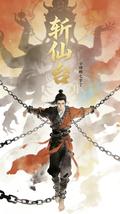
I've Read Too Many Books and I'm Sick of Them. I Can Tell Where the Story's Going from the First Page.
Any recommendations from your bookshelves??? Something original, please???



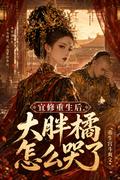

Brand-New Writer Here. I’ll Leave Five-Star Reviews for Yours, and I Promise to Return the Favor.
Looking for books similar to "Strange Disaster Begins in Well Village".



Read New Books in Full, Review Each Other’s Work, and Improve Completion Rates
I want something like Transmigrating Across Ten Thousand Years to Find You. New authors, let’s support each other: I’ll read yours if you read mine! I’ll leave a five-star review after I finish!


Why Do New Authors Get Less and Less Traffic the More They Write?
Apocalypse, other worlds, Systems, sign-in, anything goes.




Looking for Novels with an Original Worldbuilding Concept, Similar to The Foolishness of the Gods
I want to read something like "The Gods' Foolish Game". I'm going through a reading slump and want a story where the author builds the world themselves.





Construction Work + Connections + Influence + Brothers-in-Arms
Looking for books similar to "I Just Have a Lot of Brothers, Yet You Call Me the Big Brother of the Underworld." Something like the Douyin influencer Sun Ye: his family works in construction and has considerable connections and power!
Reader comments 2
Translated by Google Translate
When freedom becomes a verifiable cost, how will you choose? The coldest part of this novel is not the darkness on a cosmic scale, nor the ruthlessness of the audit executors of the "Old Holy Court", but that it treats our habits as moral and emotional issues and writes it into a system that can be run, archived, and settled: civilization is a sample, history is data, and choice is a kind of priced noise. As you read to the end, you will find that the real horror is not "someone wants to kill you" but "someone can justify killing you." What makes this book more profound than "The Three-Body Problem" is that it reveals that in the "Dark Forest", shooting has a cost. As long as the cost of shooting is greater than the benefit, advanced civilizations will not choose to shoot. In other words, as long as the benefits of cooperation are greater than the cost of destruction, low-level civilizations may make high-level civilizations choose cooperation instead of shooting. This is the law of ashes: whether it is a game between great powers, business cooperation, or workplace relationships, this is the case!
The sharpest point of this book is not in the starships and gates, but in the fact that it writes "oppression" into a set of operational systems: holy books, audit actuators, verification bubbles, and martial law covers, which calmly archive civilization and mark people as variables like a ledger. It does not use a tyrant to explain the darkness, but the "cheapest stable way" to explain the darkness, so it is more poignant. From the time track in the Rust Belt to the gray line ledger in the Molten Star Territory, to the gentle "Join us" that echoes at the end, the novel has always forced readers to face the same problem: free will is not a slogan, but a mechanism in which some people bear the price and some refuse to synchronize. After reading it, you will be left with a strong aftertaste - not enthusiasm, but a sense of clarity: when order begins to be audited, even choices require costs.