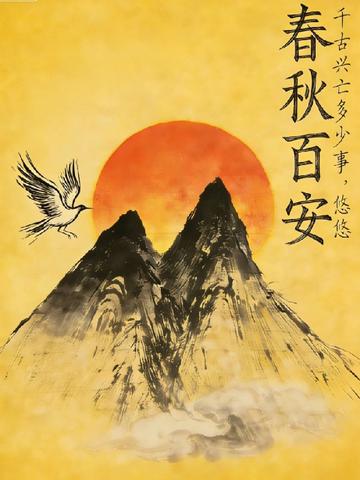
During the Yong'an period of the Chen Dynasty, when the south of the Yangtze River was misty and rainy, a dusty and banned book "Spring and Autumn Hundred Ans" reappeared among the old fragments. The official history records that the Chen Dynasty was Qingming and the Emperor Wu was Mingming, but every word in this book points directly to the distortion of historical writing - the secrets of the succession of emperors, the secrets of the power struggle in the court, and the original suffering of the people are all completely different from the official history handed down from ancient times.
It is rumored that this book was burned by Emperor Chen Wu because it recorded "true history". Those who hid it were punished and those who passed it on to the Yi tribe, but it has not escaped the passage of time. It does not record fame and great achievements, but only records the concealed truth; it does not praise emperors and generals, but only touches on the true and false nature of history.
A volume of forbidden books connects the imaginary and the real, true and false in the Chen Dynasty for hundreds of years; a piece of pen and ink reveals the world's obsession and delusion about fame. When the dust-laden truth comes out, is what Qing Shi wrote about merit and demerits, or is it a lie whitewashed by power? Let's look at "Spring and Autumn Hundred Anns" to uncover a tampered dynastic past, and carefully appreciate the true meaning and dust in the historical smoke.
Reader comments
After watching it, my legs are no longer sore and my waist is no longer painful.
After watching it, my legs are no longer sore and my waist is no longer painful.