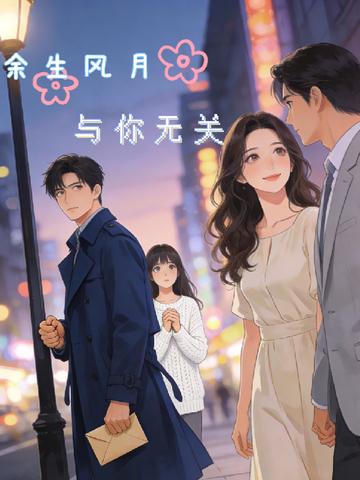
The Rest of My Life Has Nothing to Do with You
余生风月,与你无关
- Status
- Completed
- Length
- 393k Words
- Genre
- Modern Romance
- Subgenre
- Youth Sweet Romance
- Audience
- Female
- Updated
- 6mo ago
- Source
- Fanqie
Stats
2Reads
5.8Score
189Chapters
495Reads · all time
Tags
Synopsis
Reader comments
In booklists 2
Saying "I Only Treat You as My Sister", Happy Ti Chases His Wife at the Crematorium~
(●°U°●) "Are you really just a sister? Then who pitifully begged for forgiveness~
29.9MViews151Books1dUpdated
I Really Love the Sour and Bitter Novels
The male and female protagonists who had broken up at the beginning suddenly reunited. The male protagonist was in love with and angry with the female protagonist after their breakup. He pretended to be indifferent and unfamiliar, and secretly expressed jealousy. He wanted the female protagonist to coax him, but the female protagonist ignored him at all. The male protagonist collapsed and broke through all kinds of pursuits of his wife and the male protagonist.
4.6MViews306Books1dUpdated
This book is so good at writing about modern regrets. They had shared countless early morning porridge and late night drinks, but in the end they got separated in the crowd without even a decent farewell. It's only after you close the book that you understand that the most painful thing is not that you can't love, but that after loving, we become better people, but we are no longer the same.
The most moving part of the novel is that it tears through the romantic filter of "reunion through broken mirrors" and faces the tragedy caused by misunderstanding and silence. The love between Su Yanning and Shen Yanzhou was destroyed by an unspoken explanation, just like countless real relationships, they were lost not to lack of love, but to hesitation due to self-esteem and alienation due to misunderstanding. The sweeter those passionate and clumsy youth days are, the more they reflect the desolation of "nothing to do with the wind and the moon" later - the mornings, dusk, and daily fireworks that were once shared, eventually become "nothing to do with you" to move forward alone. This gap from intimacy to separation is the core lethality of the difficulty.
I really like this restrained writing style. There are no sensational lines, but there are heart-wrenching details everywhere. It turns out that the real letting go is not the decisiveness of blocking or deleting, but the calm words in my heart when I mention it, "The rest of my life has nothing to do with you."
Five-star recommendation! After reading it, I felt empty, as if I had lost something. They were so in tune, but because of a little hesitation, they missed the whole life. It turns out that the meaning of modern literature is never the earth-shattering regret, but the sentence "I still like you" that is stuck in the throat and can no longer be said.
I watched half of it with a smile on my face, and kept crying during the second half. They were each other's light, but later they became names in each other's address books that they dared not click on. The most regretful thing is not that we missed it, but that we were only one step away but could no longer take it forward. Five-star praise.
The meaning in modern literature is the most heartbreaking. There is no separation of life and death, but we just wake up one morning and find that we will never appear in each other's chat box again. When his wedding invitation came, I wanted to cry more than the protagonist. Five-star praise, in tribute to the youth that ended without illness.
Later, he had someone else by his side, and she married someone else, but I always remember that they walked side by side in the shade of the trees that summer, with the light in their eyes dazzling more than the sun. It was hard to let go, really hard to let go.
The "Feng Yue" in the title of the book refers to both the unforgettable love and the tumultuous emotional ties in the world. The four words "it has nothing to do with you" are not an indifferent separation, but the transparency and detachment after experiencing pain - no longer relying on the response of others for happiness, no longer punishing yourself with other people's mistakes, and instead looking for a destination in studies, career and self-growth. This transformation from "dependence" to "independence" allows the novel to transcend the ordinary romance pattern and convey the sober core of "you are the protagonist of your own life".
The most touching thing in the book is not the passionate love scene, but the protagonist's journey of saying goodbye to the past. From the obsessiveness of repeatedly looking through chat history late at night, to slowly learning to bury the other person's name in my heart; from the hesitation when passing a familiar street corner, to being able to talk to friends with a smile, "That was a long time ago." The author does not deliberately exaggerate sadness, but uses delicate writing to write about the process of letting go - not forgetting, but reconciling with the past and reconciling with oneself. It turns out that the real farewell is not the decisiveness of blocking and deleting, but that even if I think of it, my heart will no longer be disturbed. It is the understanding that the spring flowers, autumn moon, summer rain and winter snow in the future must be enjoyed by myself and have nothing to do with that person.
Those plots about betrayal and reconciliation, loss and awakening still linger in my mind. The most touching thing about "The Rest of My Life Has Nothing to Do With You" is that it tells us: love is never everything in life, and those missed and regretful things will eventually become medals for growth. When Fengyue exits, true romance has just begun - it is the calmness of living for oneself, the sobriety of not trying to please or force, and the determination to live life as one likes. I hope everyone who reads this book can learn to stop losses in wrong love in time, prefer themselves for the rest of their lives, and live a wonderful life that has nothing to do with romance and only belongs to themselves.
Some farewells are not hysterical tearing, but the words "The rest of my life has nothing to do with you" after Qianfan passed away. This book uses such restrained and heart-wrenching writing to thoroughly describe the gatherings and separations in adult love, and tells the story of the relief and sobriety of those who have loved, suffered, and finally learned to let go. This is not a book that teaches people to dwell on the past, but a book that teaches people to let go and bravely move toward the future. It is suitable to be read by everyone who has stumbled in love but still believes in beauty.
"The romance of the rest of my life has nothing to do with you." This short eight-character sentence expresses the most heart-wrenching core of Yi Nanping's novel: it is not that we have never fallen in love, but that we encountered misunderstandings when we fell in love so much that we were separated by the time we sobered up. This type of works, represented by Jin Yanyan's "The Rest of My Life, Has Nothing to Do with You", blends the reckless heartbeat of youth and the regret of passing by into urban love, so that every reader who has experienced "one step away from perfection" can see his own shadow in the lines.
Opening this book is like watching a grand and sobering farewell. There is no cliche reunion, no entanglement of love and hate, only the determination of a woman who turns around after exhausting all her passion.
Suddenly I understood: Love is never a required course in life, learning to love yourself is. Those who did not make it to the end are just here to teach you how to live a prosperous life in the days to come.
The love between Su Yanning and Shen Yanzhou was characterized by the reckless enthusiasm unique to young people from the beginning. They were once the brightest light in each other's youth, but because of an unspoken explanation and a passing misunderstanding, they lost each other when they were most in love. This kind of regret does not stem from a lack of love, but from the stubbornness and clumsiness of adolescence - clearly caring but being tough, clearly wanting to get closer but retreating, ultimately turning "us" into "me and you".
The most touching thing about the novel is that it does not let the protagonist be trapped in the obsession of the past. Shen Yanzhou's belated regret did not turn into a hysterical entanglement; Su Yanning's nostalgia did not turn into a self-consuming addiction. When best friends run towards Shen Yanzhou, and when Su Yanning meets a new partner who understands and cherishes her, the story does not fall into the cliché of "stealing a man", but allows everyone to move towards their own life trajectory. This kind of "no entanglement, no resentment" treatment is precisely the best respect for youth: some love is not for getting back together, but for remembering; some people are not for staying together, but for growing up.
The most touching thing about this book is never how passionate the love is, but the determination and sobriety of the heroine when she turns around. When she saw clearly that this relationship was full of holes, she no longer clung to an answer or asked "Why don't you fall in love anymore?" Instead, she calmly packed her bags, deleted all contact information, and put the past in a safe place. "The rest of my life has nothing to do with you." This is not a harsh word in anger, but a relief after a struggle - let you go, and let myself go.
Jin Yanyan's "The Rest of My Life Has Nothing to Do with You" has no bloody quarrels or forced reunions. It is more like a reconciliation letter to youth, using "missing" and "relief" to reveal the truest appearance of young love.
The three words "It's hard to calm down" are the most poignant emotional footnotes - they hide unsaid words, unfulfilled fates, and regrets that are looked back on repeatedly over the years. From the page to the screen, from text to melody, countless works take "the difficulty of letting go" as the core, telling the regrets and deep feelings of life, so that every reader can see his or her own reflection in the story.
"It's difficult to calm down" is not a shackles of dwelling on the past, but a gift given by time. It allows us to grow up with regrets and understand in looking back that there is no perfect script in life, and those unsatisfactory episodes are precisely the truest background of life. And what we can do is to cherish the present moment with this lingering warmth, and prevent the encounter at this moment from becoming a "difficult feeling" in the future.
This is a book suitable for everyone who has been confused and humbled in relationships. It tells you: love is never everything in life. Losing the wrong person is not a regret, but a blessing. Those disappointments that once made you heartbroken will eventually become the armor for your growth; those things you once thought you had to have with him will eventually become "fortunately it's not him" over time. May we all be like Su Yanning, never losing ourselves in love, and bravely turning around after loss. If there is no one to enjoy the rest of our lives, we will bloom alone and become our own scenery.
Jin Yanyan's "The rest of my life has nothing to do with you" is a letter of reconciliation written to the missed youth. There is no bloody entanglement in the story of Su Yanning and Shen Yanzhou, only youthful stubbornness and belated regret. When the heroine turns around and embraces a new life, she realizes: the best ending is never to reunite, but to be happy.
Compared with those vigorous sadomasochism, this gentle narrative with a touch of regret is more poignant for those of us who have experienced the loss of youth. After all, not all love needs a happy ending. Sometimes, "letting go" itself is the best answer.
The story of a heart-wrenching story never ends in a simple tragedy, but the author uses the most delicate pen to give hope and then gently crush it, letting the beauty stop at the hottest moment and letting the emotions be hidden in the unspoken words. The regrets, misses, and unfulfilled desires of those characters eventually shine into the hearts of readers, becoming our empathy for all the "unfinished things" in life - perhaps unsatisfactory, which is the most touching aspect of the story and the truest background of life.
"The rest of my life has nothing to do with you" is like looking through an old photo album. The young love between Su Yanning and Shen Yanzhou was stranded due to misunderstanding, but they were relieved due to growth. There is no bloody robbing drama, only a dignified exit as an adult - the rest of my life has nothing to do with you from now on. This is the best farewell to the past.
"I don't regret meeting her, but I don't want to do it again." This is the most heart-wrenching confession in the book. "The rest of my life has nothing to do with you" is not to deny the beauty of love, but to teach us how to exit gracefully when love is not available. It tells us that a good life is not only about meeting the right person, but also about stopping losses in the wrong relationship in time and taking back your own love.
Everyone in the story has his own destination, but regrets remain where they are forever, waiting to be remembered.
When I close the page of the book, the feeling of loss and boredom in my heart is the most realistic expression of "difficulty in calming down". It is never a heart-wrenching cry, but like the evening breeze blowing through the window lattice, light but long-lasting, suddenly hitting you at an ordinary moment, reminding you of a certain person or sentence in the book, and sighing, "It would be great if this were the case." This regret is the gentlest "stamina" of literature. It shatters the perfection of the world, but makes the story take root in the heart and becomes an obsession that cannot be let go for a long time.