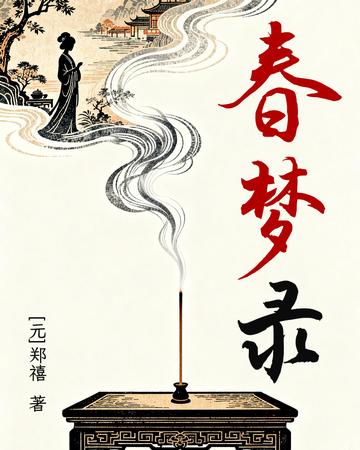
The story begins when Zheng Xi was staying in Hong Mansion, and a matchmaker arranged for the daughter of the Wu family in the west of the city. The daughter of the Wu family "was raised in a Confucian family, and was both talented and beautiful. She was not very good at music, chess, poetry, and calligraphy." Her father's last wish was for her to marry a Confucian scholar.
Although Zheng Xi was already married, he responded to the matchmaker's request and composed the phrase "Magnolia Slowness". After reading it, Wu's daughter admired his talent and gave him a poem in return, and the two began to sing poems in harmony.
Wu's daughter even sent a message through her wet nurse, expressing her willingness to be a concubine.
However, Wu's mother was greedy for wealth and betrothed her daughter to the son of the wealthy businessman Zhou, regardless of her wishes.
Wu's daughter refused to obey because "Zhouzi was uneducated and incompetent", and was beaten by her mother during the struggle. She eventually became ill with grief and anger, and died with hatred.
Before she died, she asked her maid to hide her poems and Zheng Xi's letters in the coffin to clarify her aspirations.
In grief, Zheng Xi compiled the letters and poems between the two and compiled it into "Spring Dream Record".
The style of "Spring Dreams" combines autobiographical, diary and epistolary styles. Its main body consists of a preface, 52 letters, and 20 poems (a total of 72 works), creating a narrative mode of "recording correspondence".
This method of using poetry as the core of the narrative is considered by scholars to be an "innovation based on the legends of the Tang and Song Dynasties" and pioneered poetic love novels in the Ming Dynasty.