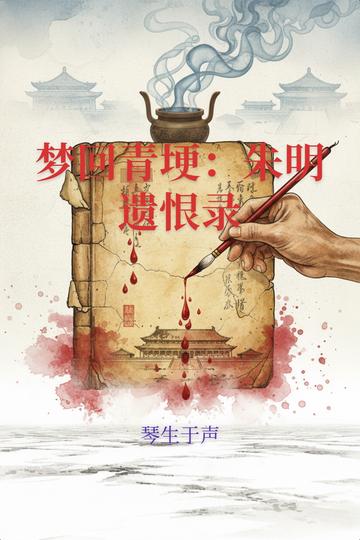
For three hundred years, the world only knows Xue Qin's tears, but who knows the emperor's son's tragic song?
This is not the Feng Yue Bao Jian you have read so well.
While everyone was looking for family evidence for the Dream of Red Mansions, the historical truth quietly emerged from the exhibition stand of the Shanghai Museum. The densely packed cinnabar comments and the ink text came from the same trembling hand - a hand that once touched the Xuande Golden Furnace of the Ming Dynasty, but in the end could only hold a handful of weeds.
In the eyes of the world, he is a down-and-out bannerman painter; in the darkness of history, he is the "Third Prince Zhu" left behind by Emperor Chongzhen among the people.
In order to avoid the smell of the Qing court's hawks, he wrote "family death" as "daiyu buried flowers" and "national destruction" as "white earth". Grand View Garden is not a gentle town, it is the Forbidden City that he dreams about but can never go back to; Jia Baoyu is not a rich and idle person, it is his last tribute to his career as a prince in the first half of his life.
This book uses a unique "time countercurrent" writing method to take you from the cold side of the modern shop window, step by step back to the lonely lantern on the cold night in Huangye Village, back to the shaved monk in exile, until the bloody dusk in the 17th year of Chongzhen.
Open this book and what you read is no longer a novel. This is an imperial testament that covers the blood with powder and wraps the truth with absurdity.