[Overpowered protagonist, mastermind behind the scenes, revenge, and System]
The day the cultivation System bound itself to its Host, I hit a bug and accidentally possessed the Host instead.
From then on, the whole cultivation style went completely off the rails.
Other people's realms depend on enlightenment; mine depend on spending points. Other people's inner demons are tribulations; my tribulation lightning is a power bank.
While the sect's chosen prodigies fight to the death for an ancient treasure in a secret realm, I just lift a hand, scan and disassemble it, and exchange it for a hundred thousand spirit energy points.
Cultivation is just this simple, plain, and boring.
I thought I'd keep analyzing my way to the end of the world in this invincible yet dull state.
I didn't know that the Host's residual soul, the one I'd overwritten, hadn't disappeared. It escaped into the darkness with part of my core code.
It happened upon a villain blessed by fate and disguised itself as another System.
It gave out missions and granted power, quietly assimilating the villain's soul with tender concern.
Hidden behind the scenes, it wove a web, using my rules to forge a poisoned blade meant solely for revenge.
That is, until I reach the very peak and prepare to turn the entire world into data.
When the eyes hidden behind the scenes open, a soft laugh rings out: "I've found you... my dear System."
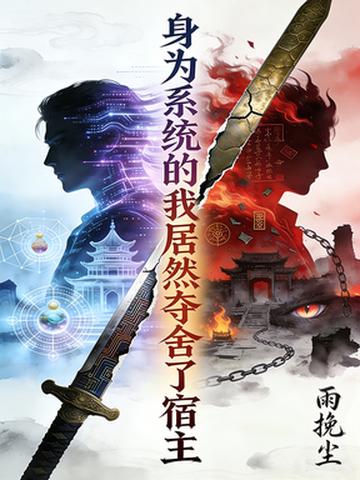

The bright line is that the protagonist integrates into the world of cultivation as a host body, rapidly upgrades system capabilities, explores secret realms, and solves mysteries, showing the novel experience of digital cultivation. The hidden thread is that the covered host Chen An did not disappear completely. His remnant soul escaped with part of the system's core code, disappeared into the darkness, and disguised himself as a villain bound to another system to secretly plot revenge. The novel is good-looking, the story is exciting, the concept is good, and the characters are rich. It is a classic novel with an engaging opening, compact rhythm, unique style, and profound and delicate imagery. The novel setting, intensive foreshadowing, and clever double-line design have shown the potential to become a popular anti-routine fairy tale.
This work subverts the traditional system flow narrative in one fell swoop with the bizarre setting of "system BUG seizes the host". When the cold rules themselves give birth to consciousness, and the devoured host's remnant soul turns into a revenge ghost, the ultimate game of "me and me" begins. The author cleverly collides "digital cultivation of immortality" with "human obsession". Under the refreshing appearance of invincible flow, there are deep thoughts about identity, control and backlash. When the man behind the scenes reveals the ending with a chuckle, readers are shocked to realize: the strongest enemy has always been another self. The setting and suspense are both excellent.
The system seizes the host's mind and jumps directly out of the routine of similar themes, which is very interesting. Others rely on enlightenment to achieve immortality, and the protagonist advances all the way by adding points to the system. Thunder Tribulation can be used as a power bank, and Daozang in the secret realm can be decomposed and exchanged for spiritual energy points at a glance. The feeling of invincibility is carried through to the end, but in the later stage, there is a reversal of the host's remnant soul defecting with the core code. In short, the story is very layered. What's even more rare is that the author's writing style is smooth and delicate, and his narration is neat. With just a few strokes, he can outline a full-featured fairy tale scene, and the description of the characters' emotions is also delicate and vivid.
This book can be called a wall-breaking work for the invincible cultivator. Others rely on enlightenment to overcome tribulations, and the protagonist's upgrade relies on adding points to decompose. The settings of "Thunder Tribulation as a power bank" and "Secret Dao Zang in exchange for aura points" maximize the "unpretentious and boring" feeling of invincibility. The points are intensive and unconventional. But the most amazing thing about the story is not simply a cool plot, but the hidden thread behind Invincible. The remnant soul of the host escapes with the core code, pretends to be a system, assimilates the villain, and weaves a web of revenge. This reversal directly adds dimension to the plot. When the protagonist prepares for the digitized world from an overlooking attitude, the "prey" who was taken away from him in the past turns into a hunter. The sense of fate and drama is simply overwhelming, full of stamina, and intriguing.
The writing of this book is fluent, and the plot is delicate and exciting. The plot has ups and downs. The work is set to bind the host to the immortal cultivation system, but a bug occurs and the host is accidentally taken away. The subject matter is novel, the sensory experience is very real, the anti-routine plot is interesting, and it is good to watch. Please update it quickly, I want to read the rest of the story!
This work uses the absurd setting of "system BUG to seize the host", weaving a dislocated carnival in the world of immortality. The protagonist Lin Xuan suddenly suffered a reversal of authority when he was bound to the system. After the system took over, his style went astray - he used Thunder Tribulation as a power bank to absorb spiritual energy, upgraded easily by "adding points", and played immortality as a data game; while the overwritten remnant soul of the original host escaped with the core code, pretending to be a new system and quietly taking revenge. The game of dual systems hides murderous intent. The plot goes from the growth of the sect of "the leader of the outer sect", to the exploration of the secret realm of the "Secret of Yuanshi", to the undercurrent of "the first appearance of the corpse", the battle from the data perspective is intertwined with bloody opportunities, and the sense of absurdity and suspense coexist. The "irregularity" of the system style of painting collides with the protagonist's witty response to create a unique spark. It is a sincere work of "dislocation system flow" in the fairy tale.
"Treading the Shasha·System Usurping the Way" Tampering with the secret of heaven and secretly changing the spiritual axis. The Tongxuan key opens the Yin and Yang Road. Scan the Wanfa Duiyun root and charge the thunder pool with the number of immortality. The remaining soul is trapped in the abyss, and the Gu is cast by splitting the light. Secretly weaving Qiu Ren into his bones. When I arrived, I suddenly saw the old blue eyes, and a scarlet curtain popped up in the void. "The Lights of the Tang Dynasty" talks about the past and the present, sincerely
The subject matter is novel, the opening chapter is eye-catching, the characters are vivid, and the plot rhythm is relaxed and moderate. The more you read, the more you get hooked! The foreshadowing is cleverly laid, and every twist is unexpected and reasonable. The text is not cluttered, and it is very comfortable to read. I hope the author will continue to update it, and I will definitely follow it! The faster the better
There are two things I appreciate about this novel. The first point is its content setting. I am actually the system, and I have also taken away the host. This setting is very novel, very special, rare, and quite attractive. The second point is that the overall structure of his story is compact, logical, professional and story-telling, coupled with the embellishment of vivid and interesting language, making the whole novel easy and enjoyable to read.
"As a system, I actually took over the host" uses the innovative setting of system BUG to take over the host, subverting the traditional framework of immortality novels. The invincible flow and extra points upgrade bring a refreshing reading experience, and the revenge twist of the host's remnant soul cleverly integrates the elements of behind-the-scenes mastermind and revenge, adding suspense and depth. The author Yu Wanchen's writing style is humorous, multi-genre integration and natural, and the narrative is compact. The overall novel is full of creativity and fast-paced, suitable for readers who are looking for fresh settings.