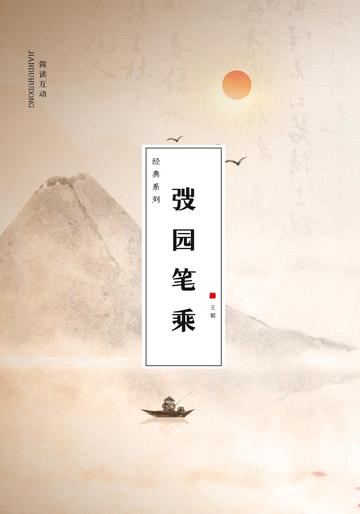
The Taoyuan Bicheng is a collection of essays and miscellanies compiled in his Taoyuan study by Wang Tao, a late Qing thinker, political commentator, and man of letters. It is an important source for understanding social changes in the late Qing and the practical application of Wang Tao's ideas. Wang Tao (1828–1897) was a highly influential figure in modern Chinese history. Not only was he an early advocate of reform, he also pioneered political commentary in the Chinese press. Lin Yutang hailed him as the “Father of Chinese Newspapers.” The Taoyuan Bicheng records Wang Tao's observations and reflections on current affairs, social phenomena, and anecdotes about notable figures. Drawing largely on hearsay, conversations about officialdom, and historical sketches, it depicts society and political upheaval in a concise, straightforward style, with a strong sense of its times and keen powers of observation. These notes reveal the dilemmas facing the late Qing bureaucracy, mounting social tensions, and the many facets of the clash between tradition and modernity. They also reflect the author's firm belief in reform and national strengthening, the adoption of Western learning, and the enlightenment of the people.
In content, the Taoyuan Bicheng includes accounts of major historical events, such as public opinion and popular sentiment surrounding the Hundred Days' Reform, as well as descriptions of everyday observations and urban customs. It thus offers both historical value and literary appeal. Through these essay-like records, Wang Tao uses literary and analytical prose to weave together the memories of an era, giving readers not only information but also a sense of the complexity and gravity of those turbulent late Qing years. For readers researching late Qing intellectual history, commentary in modern newspapers, or social and cultural change, the Taoyuan Bicheng is a rare primary source. Its unconventional perspective helps us understand the political issues and everyday lives of the people of that age.