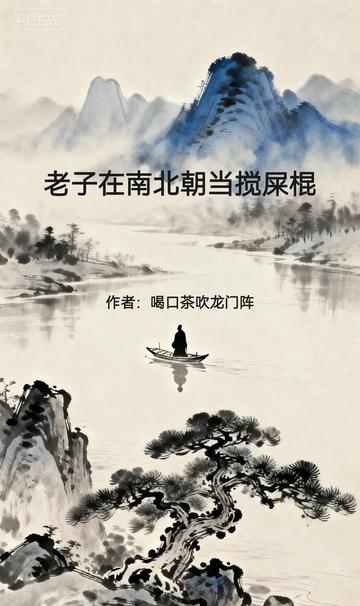
Laozi as a Trouble-Maker in the Northern and Southern Dynasties is a long comic novel combining historical transmigration, power politics, business, and life among ordinary people. Zhang Wei, a young man from modern-day Chongqing, unexpectedly transmigrates to Pingcheng in the Northern Wei dynasty. He wakes in a mass grave with no money and unable to speak the language, but through sheer Chongqing grit and modern thinking, he carves out a way to survive in a chaotic age.
Starting out as a street vendor selling Sichuan peppercorns in the Western Market, Zhang Wei draws on his sharp instincts for spices and food to develop distinctive dried meats and alcoholic drinks, and even enters the state-controlled salt and iron trade, gradually building up his capital. He befriends Tuoba Ye, a fallen Xianbei noble, and the two hit it off. Using business as their leverage, they deftly navigate the competing worlds of Xianbei tribes, Han Chinese aristocratic clans, and powerful court officials, maneuvering through the arenas of power in the Western Market, Pingcheng, and even Luoyang. After helping Tuoba Ye ascend the throne, Zhang Wei faces political purges and the collapse of his ideals. What will he ultimately choose: to retire from public life, resist, or seek a new answer?
Zhang Wei makes clever use of modern strategies such as “killing with a borrowed knife” and shaping public opinion to overcome crises and strengthen his position. He pushes for new salt and iron policies, builds an intelligence network, trains a private guard, and even interferes in the struggle for the throne, becoming a pivotal troublemaker in the turbulent politics of the Northern Wei.
Opening with lively, vivid Chongqing dialect, the novel blends food and business, commercial strategy, political maneuvering, and alternate history. It portrays how an ordinary modern man, in the chaos of the Northern and Southern Dynasties, uses his intelligence, courage, and unconventional troublemaking spirit to gradually change the course of his own fate and that of his era.
It's a very interesting read, and I can understand the historical allusions of the Northern Dynasties. I hope to write about the struggle between the protagonist and Tuoba Ye later.