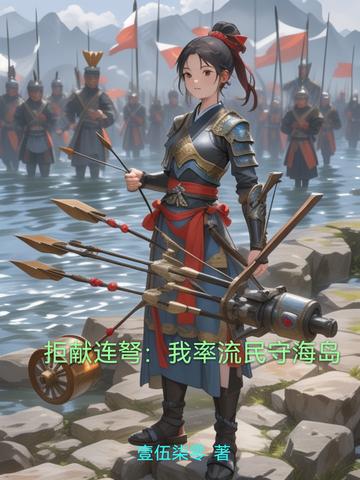
In the 13th year of Shaoxing in the Southern Song Dynasty, a turning point that deviated from the official history occurred along the Huaihe River where the Song and Jin Dynasties were in confrontation. Lin Axia, the daughter of a blacksmith from Haozhou, improved the Mohist method and created a "water-powered repeating crossbow machine", which could use the power of the Huaihe River to fire twenty iron arrows in a row to protect the hometown and repel the small-scale Jin army.
This technique soon spread to the Jin camp. Marshal Wanyan Zongbi of the Jin army threatened to massacre the city and forced Lin Axia to offer his machine. The Southern Song Dynasty court sent an imperial envoy to recruit the Liannu machine to the armory. In fact, he wanted to use it to bargain with the Jin Kingdom when negotiating peace.
Lin Axia did not want technology to become a murder weapon, so she took three apprentices and fled to Fushan Island where refugees gathered with the blueprints. When the Jin army pursued them, she led the civilians to set up an ambush using a simplified version of the serial crossbow machine, and used the waterway advantage to repel the pursuers. In the end, Lin Axia did not return to the Song Dynasty or pay any money, but established a craftsman camp on Fushan Island to teach the refugees to make improved agricultural tools and defensive equipment, making technology the foundation for the refugees to make a living and protect themselves. Although the Song and Jin Dynasties did not obtain a complete series of crossbows, they both suspended the war along the Huaihe River because of this "civilian technical resistance".