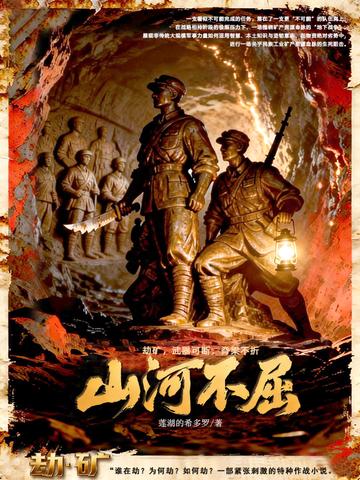
From the autumn of 1938 to the spring of 1941, "Qinghe County" - the junction of the North China Plain and the Taihang River. There were Qinghe Water Transport Terminal, Pinghan-Hankou Railway branch line, mountains and hills and plain villages intertwined within the territory. It had the dual characteristics of transportation arteries and complex terrain. This is not the hottest front line of the war, but it is the resource vitality gate that determines the pulse of the war. The Japanese army not only carried out a large-scale invasion of China, but also greedily devoured the mineral deposits deep in the earth, turning them into bullets to shoot at their compatriots.
A seemingly impossible task fell on the shoulders of an even more "impossible" team: under the extreme pressure of the strategic stalemate stage, an "underground war" centered on the lifeline of mineral resources.
It shows how non-traditional military forces use wisdom, local knowledge and tenacity to carry out a life-and-death attack related to the blood of national industrial and mineral resources in the face of absolute material disadvantage.