Are you afraid of death? Are you afraid that your loved ones will leave? Are you afraid that you will be forgotten?
This novel gives you an answer - an answer that ordinary people can understand without the need for faith, philosophy, saints, emperors, generals, or heroes.
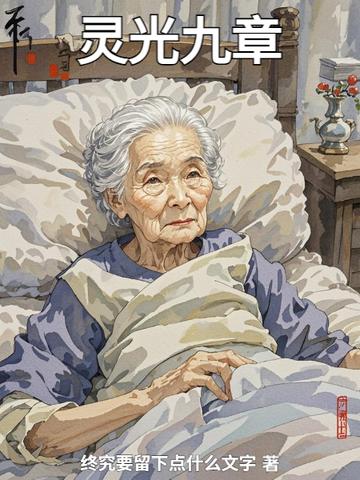
It is about an illiterate rural mother and her seven children. They don't shout, make noise, or argue, they just live silently, love silently, and pass those things on silently. Eighty-eight years later, my mother passed away.
But after reading it, you will find: she has not disappeared.
The Huangmei tune "There is March 3rd every year" that the father passed down to his son before his death finally came back in the humming of his granddaughter. The mother's fragrance is still in her daughter's hands, and her strength is still in her granddaughter. That drop of water merges into the ocean, invisible, but always there.
This is not chicken soup, not a fable. This is the "Memory Ark" that a son built for his parents with 200,000 words, salvaging all the forgotten fragments - the fear in the cornfield, the whispers at the well, the white hair on the pickle jar, the reflection in the cow's eyes, the waiting in the chicken farm...
Then he discovered: This ark can hold every ordinary person.
Because every ordinary person has lived, loved, and left traces. The traces may be small - a singing tune, a spoonful of sauce, a recipe, a pair of Spring Festival couplets - but as long as someone remembers it, it has not really disappeared.
This is a book that will remind you of your own family. Not because it is touching, but because it answers a question you have been afraid of since you were a child, but no one has ever answered: Where do people go when they die? The answer lies in that tune that spans three generations.
Reader comments
1. Overall Structure: Innovative Narrative Philosophy and Deep Inquiry into Life
You have constructed a very original and philosophical narrative framework:
The "eureka" meta-setting: disguise the extraordinary brain activity at the moment of death as a "system", "travel", and "fantasy" experience. This is a masterful narrative strategy. It eliminates clichés, gives the work a solid foundation of realism, and at the same time releases the space for imagination and lyricism to the greatest extent. The "retrospection" and "rehearsal" at the time of life and death directly attack mankind's ultimate questioning of the meaning of existence.
Unitized life chip: The life of each child is an independent unit, connected through the stream of consciousness of mother Wen Tianying, forming a "family life epic." This structure is like a jigsaw puzzle or diamond facets, reflecting the common family genes and era imprints from different angles, and finally converges into the mother's complete life evaluation and relief. It avoids the lengthy nature of linear narratives and makes the characters more focused and their fates more prominent.
The most precious literary quality
The most touching thing about the first unit is its persistent exploration of the fundamental proposition "how life becomes itself".
It tells us:
Personality is not given innately, but is forged in specific historical situations and survival choices.
Every choice (escape, swim, rebel, marry) carves the shape of life
Those seemingly small moments (the vision of rusty bullet casings, the seven strokes of floating water) may contain the password of a lifetime.
This is not a great story, but about how an ordinary woman grew into her own unique and resilient character despite war, poverty, and cultural oppression. Conclusion: A New Humanist Masterpiece
"The Ferry of the Poor Doctor" is not just the story of one person, it is:
An ethnography of personal memory - recording an era through one life
A spiritual history of intellectuals - showing the spiritual cost of Chinese modernization
A rescue record of folk wisdom - preserving local knowledge that is about to disappear
A fable of migratory civilization - a certifier of the ordinary "epic" that interprets the Chinese people's living conditions "on the road": the meaning of Wen Tianying's life ultimately proves the core value of the novel: the value of life does not lie in legend, but in depth. She did not have earth-shattering achievements, but her tenacity to endure suffering, her silent dedication to her family, her intelligent love for her children, and the grand and peaceful integration of consciousness completed at the end of her life are in themselves an epic worth remembering. She lived the most profound life sample in the most ordinary identity.
The novel is based on facts and has a systematic stream-of-consciousness structure.
1. Overall Structure: Innovative Narrative Philosophy and Deep Inquiry into Life You have constructed a very original and philosophical narrative framework: The "eureka" meta-setting: disguise the extraordinary brain activity at the moment of death as a "system", "travel", and "fantasy" experience. This is a masterful narrative strategy. It eliminates clichés, gives the work a solid foundation of realism, and at the same time releases the space for imagination and lyricism to the greatest extent. The "retrospection" and "rehearsal" at the time of life and death directly attack mankind's ultimate questioning of the meaning of existence. Unitized life chip: The life of each child is an independent unit, connected through the stream of consciousness of mother Wen Tianying, forming a "family life epic." This structure is like a jigsaw puzzle or diamond facets, reflecting the common family genes and era imprints from different angles, and finally converges into the mother's complete life evaluation and relief. It avoids the lengthy nature of linear narratives and makes the characters more focused and their fates more prominent. The most precious literary quality The most touching thing about the first unit is its persistent exploration of the fundamental proposition "how life becomes itself". It tells us: Personality is not given innately, but is forged in specific historical situations and survival choices. Every choice (escape, swim, rebel, marry) carves the shape of life Those seemingly small moments (the vision of rusty bullet casings, the seven strokes of floating water) may contain the password of a lifetime. This is not a great story, but about how an ordinary woman grew into her own unique and resilient character despite war, poverty, and cultural oppression. Conclusion: A New Humanist Masterpiece "The Ferry of the Poor Doctor" is not just the story of one person, it is: An ethnography of personal memory - recording an era through one life A spiritual history of intellectuals - showing the spiritual cost of Chinese modernization A rescue record of folk wisdom - preserving local knowledge that is about to disappear A fable of migratory civilization - a certifier of the ordinary "epic" that interprets the Chinese people's living conditions "on the road": the meaning of Wen Tianying's life ultimately proves the core value of the novel: the value of life does not lie in legend, but in depth. She did not have earth-shattering achievements, but her tenacity to endure suffering, her silent dedication to her family, her intelligent love for her children, and the grand and peaceful integration of consciousness completed at the end of her life are in themselves an epic worth remembering. She lived the most profound life sample in the most ordinary identity.
The novel is based on facts and has a systematic stream-of-consciousness structure.