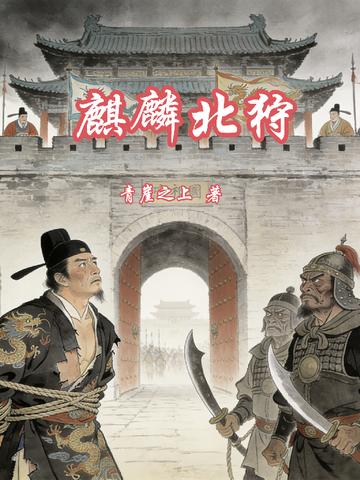
He ascended the throne at nine and became an emperor of a golden age. At twenty-two, he led a campaign in person and ended up a captive beyond the frontier. From the heights of the Forbidden City to a prison tent in the Oirat camp, Emperor Yingzong of Ming, Zhu Qizhen, suffered the most devastating fall in the empire’s history.
The Tumu Crisis destroyed hundreds of thousands of elite troops and buried his naïve dreams of heroism. Taken prisoner and forced to beg at the gates, battered by the snows of the northern deserts and confined for seven years in the Southern Palace... After losing everything, he learned the art of survival and experienced both the warmth and cruelty of human nature.
Eight years later, the Coup at the Palace Gate put him back on the throne. Once he regained power, he had to face a bloody reckoning: execute Yu Qian to secure the throne, eliminate powerful ministers to strengthen the realm. But in the dead of night, the loyal souls who had died and the lonely moon over the Southern Palace never left him.
This is a story of redemption. In his later years, he overruled his opponents and abolished the practice of burying imperial consorts alive, ending a barbaric custom that had lasted for a century. His life was full of contradictions: trusting treacherous eunuchs yet abolishing an evil custom, failing in a northern campaign yet securing the frontier, staging a ruthless coup yet governing with benevolence in his final days.
Behind the complex posthumous title “Yingzong” was a man repeatedly battered by fate. He struggled, learned, and changed in the harshest of circumstances, and in the end found the last glimmer of humanity between the throne and his chains.
The sun and moon still shine over these mountains and rivers, and the jujube trees in the Southern Palace bear fruit year after year. History’s judgment of him is like the jade pendant passed between enemies and allies: smooth and warm, yet cracked, silent but still resonant.