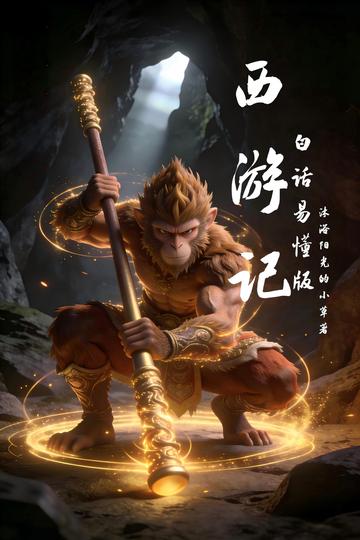
As the pinnacle of Chinese classical novels about gods and demons, "Journey to the West" is by no means a simple mythological adventure story, but a fantasy heroic epic that lays out the social background of the Ming Dynasty.
The story begins with the birth of the stone monkey Wukong, who causes chaos in the heavenly palace and breaks the rules of heaven. After being enlightened by Guanyin, he, together with the worldly greedy Bajie and the loyal and steady Sha Seng, assists Tang Monk, who has the ambition to save all sentient beings, on his journey to the West to obtain scriptures. Along the way, they braved the flames of the Flame Mountain, crossed the dangers of the Liusha River, subdued the deception of the White Bone Demon, and saw through the scheme of the Golden Horned King. During the hardships of Nine-Nine-Eighty-One, they performed a fierce confrontation between loyalty and betrayal, persistence and wavering, freedom and discipline.
It uses the eccentricities of the three realms of gods and demons to illuminate the dilemma of the Ming Dynasty - the confinement of human nature by feudal ethics, the hypocrisy and rigidity of the official system, the entanglement of good and evil in the secular human heart, and the yearning for freedom and persistence of faith at the bottom. This work breaks away from the traditional conventions of fantasy and monsters, interweaving fantasy imagination with realistic metaphors. It is not only an adventure record of gods and demons, but also a spiritual map of Ming Dynasty society. Its unique philosophical thinking and artistic charm are still shining in the literary galaxy to this day.