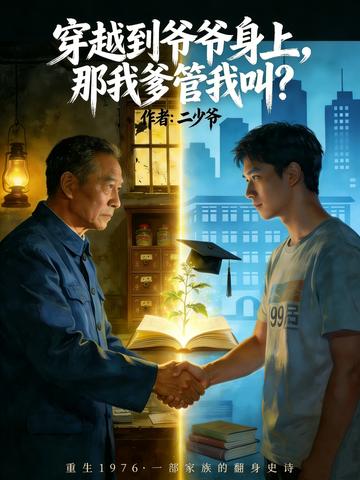
When I opened my eyes, I had become my grandfather.
It was 1976, in a mountain village in eastern Sichuan. Beneath the light of a kerosene lamp, seven gaunt children stared at me. The thirteen-year-old among them was my father.
My memories of my previous life told me what lay ahead: the family would be trapped in the mountains, never produce a single college graduate, and struggle just to get by. Because of “Grandpa’s” shortsightedness, all seven children would take the wrong path in life.
But now, I was Jiang Jishi, a barefoot doctor, and the one steering this family’s future.
“Dad, I want to quit school and earn work points,” my thirteen-year-old father said softly.
“I’ll earn the work points,” I told him, staring into his eyes. “Your job is to study.”
I knew every turning point in history: the 1977 college entrance exam, the household responsibility system in 1980, and the spring breeze of Deng Xiaoping’s 1992 southern tour. I gathered herbs to earn money and pushed every child to study. The year the college entrance exams were reinstated, I sent my third aunt into the exam hall.
The villagers said Doctor Jiang was crazy: he couldn’t even feed himself, yet he wanted to put seven children through school.
They didn’t understand. As I watched my feverish father and held his burning little hand, I had only one thought:
In this life, as his grandfather, I would win back, piece by piece, the life my father had lost.
This was the Jiang family’s fight to rise again.
It was a transmigrator’s deepest act of redemption for his own bloodline.