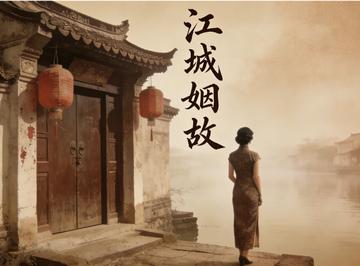
In Jiangcheng during the Republic of China, Su Wenxuan, the son-in-law of the Lin family's textile factory, made a living by weaving the warp and weft and adhered to his original intention with ethics. He respected his clan, loved his wife and children, and regarded the Lin family's ancestral property as his own responsibility. However, he did not expect that under the beauty of his marriage, there was a hidden thread of betrayal - his wife Lin Wanqing was driven by ambition and colluded with Zhang Qiang, who coveted the ancestral property. They used the family's reputation as bait to expel him from the family.
With the genealogy as evidence and the ancestral hall as evidence, this dispute over ancestral property, heirs and ethics has plunged the Lin family into a crisis of ethical collapse: the rules of the textile factory have been destroyed, the family's reputation has been tarnished, and the bloodline inheritance is in jeopardy. Su Wenxuan took his son away, but did not forget the family's instructions; Lin Wanqing suddenly woke up and used redemption to make up for her mistakes; Zhang Qiang had exhausted all his traps and could not escape the ethical judgment.
From family grievances to family watch, from betrayal and loss to ethical return, "Jiangcheng Marriage" uses Jiangcheng in the Republic of China as the background to weave a long ethical scroll about the loyalty and forgiveness of husband and wife, the care of parents and children, and the inheritance of the clan. As the years go by, the river and the moon remain unchanged. Only the original intention of adhering to ethics can make the broken marriage and ancestral property return to peace in the wind and rain.