They are not zombies. They can think, knock on your door politely, and transform infected people into more terrifying enemies based on their personal abilities.
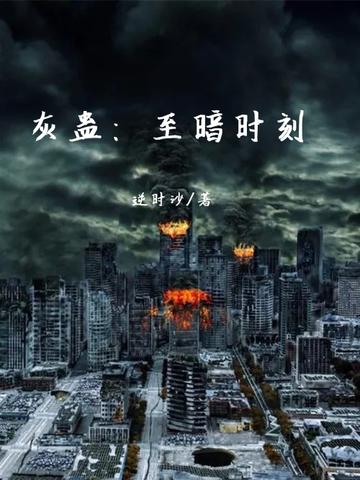
Gray Goo - the most terrifying creature in human history.
It doesn't kill people, it "optimizes" people: it strips away your emotions, reorganizes your body, and builds it into a perfect crystal city. The infected think clearly, they hold weapons and calmly "repair" all chaos.
This is not an out-of-control nanoplague, but a curse planted by a betrayed genius before his consciousness was erased. He wants to transform the entire world into his ideal "absolute order."
The southwest has fallen, the Yangtze River is in danger, international misjudgments have occurred, and aircraft carriers are under pressure. However, the super AI Hongjun, humanity's greatest reliance, has the following principles: research is greater than destruction, and control is prior to rescue. It calmly calculates a 0.03% Survival probability and refuses to make a desperate move.
Chen Xiao, Xing Tian... A group of ordinary people without the halo of protagonists, between Hongjun's calculations and Gray Goo's hunting, trying to answer a question: When the enemy uses the body of your companion to slaughter you, and when the allies evaluate you with probability, why can people resist?
This is a war of mortals against their own creation.
There is no chosen one, only mortals who have been crushed by the times.
Survival itself is the greatest resistance.
Reader comments
The title of the book is a bit cheesy, but the content is terrifyingly solid. The author's construction of the world is extremely delicate - gray goo is not a simple nano-robot out of control, but a "curse of the betrayed". At first, I thought it was an ordinary post-apocalyptic article about fighting monsters, but I found out that I was deceived - there are no "monsters" to fight in this book. The enemies are invisible nanoparticles, pseudo-people disguised as relatives, and your own emotions that are gradually indifferent. This fear is higher than any zombie.
This is not a serious book review, just a story writer speaking from his heart.
At the beginning of "Grey Goo", I just wanted to write a different apocalyptic story.
Most of the apocalyptic stories on the market are cool stories in which the protagonist fights monsters and upgrades to save the world. I also want to write exciting articles, but as I write, I realize that I can't deceive myself. If the end of the world really comes, how can I have the halo of the protagonist? Where is the Son of Destiny? In the face of disaster, everyone is equal.
So "Grey Goo" has no protagonist. In other words, everyone is the protagonist. Officer Zhao, Wu Junfeng, Su Wan, Chen Xiao, Xing Tian, Han Zhenguo, Zhang Heshu... They are all fighting against the same disaster in their own way. No one is more important than anyone else, and no one is destined to live to the end.
This kind of group portrait narrative is difficult to write. It is too difficult to keep so many characters standing, to make every line have a beginning and an end, and to make readers remember the name of every victim. But I still want to give it a try.
Because this is the true end of the world.
If you like The Three-Body Problem, don't miss this domestically produced apocalyptic science fiction. If you like The Three-Body Problem, the sense of powerlessness that humans feel when facing an unknown civilization, this book should suit your taste. The enemy is also incomprehensible, it is the torture of human nature, and it is the same choice for the survival of civilization.
The line of Hongjun is particularly interesting. A super AI that runs earlier than Gray Goo, the principle is actually to prioritize control over rescue, and research over destruction. Its route is different from that of Longyuan Pavilion, and it is very similar to the game between humans and Trisolarans in the Three-Body Problem. And Ke Jinnian, who has never officially appeared, is wandering in every line of code like a ghost.
The pace of this book is too controlled. There is a hook at the end of each chapter. You can never guess who is going to be written in the next chapter, but you always want to know what will happen next. This kind of group portrait narrative is too difficult to write. The author can control hundreds of chapters without chaos. He is definitely a ruthless person [Like] [Like]
A science fiction novel with great potential. The logic is clear and the content is substantial. Although it involves a lot of professional terms that I can't understand, I think it's very powerful. I'm optimistic about the author😁😁
The title of the book is a bit cheesy, but the content is terrifyingly solid. The author's construction of the world is extremely delicate - gray goo is not a simple nano-robot out of control, but a "curse of the betrayed". At first, I thought it was an ordinary post-apocalyptic article about fighting monsters, but I found out that I was deceived - there are no "monsters" to fight in this book. The enemies are invisible nanoparticles, pseudo-people disguised as relatives, and your own emotions that are gradually indifferent. This fear is higher than any zombie.
This is not a serious book review, just a story writer speaking from his heart. At the beginning of "Grey Goo", I just wanted to write a different apocalyptic story. Most of the apocalyptic stories on the market are cool stories in which the protagonist fights monsters and upgrades to save the world. I also want to write exciting articles, but as I write, I realize that I can't deceive myself. If the end of the world really comes, how can I have the halo of the protagonist? Where is the Son of Destiny? In the face of disaster, everyone is equal. So "Grey Goo" has no protagonist. In other words, everyone is the protagonist. Officer Zhao, Wu Junfeng, Su Wan, Chen Xiao, Xing Tian, Han Zhenguo, Zhang Heshu... They are all fighting against the same disaster in their own way. No one is more important than anyone else, and no one is destined to live to the end. This kind of group portrait narrative is difficult to write. It is too difficult to keep so many characters standing, to make every line have a beginning and an end, and to make readers remember the name of every victim. But I still want to give it a try. Because this is the true end of the world.
If you like The Three-Body Problem, don't miss this domestically produced apocalyptic science fiction. If you like The Three-Body Problem, the sense of powerlessness that humans feel when facing an unknown civilization, this book should suit your taste. The enemy is also incomprehensible, it is the torture of human nature, and it is the same choice for the survival of civilization. The line of Hongjun is particularly interesting. A super AI that runs earlier than Gray Goo, the principle is actually to prioritize control over rescue, and research over destruction. Its route is different from that of Longyuan Pavilion, and it is very similar to the game between humans and Trisolarans in the Three-Body Problem. And Ke Jinnian, who has never officially appeared, is wandering in every line of code like a ghost.
The pace of this book is too controlled. There is a hook at the end of each chapter. You can never guess who is going to be written in the next chapter, but you always want to know what will happen next. This kind of group portrait narrative is too difficult to write. The author can control hundreds of chapters without chaos. He is definitely a ruthless person [Like] [Like]
A science fiction novel with great potential. The logic is clear and the content is substantial. Although it involves a lot of professional terms that I can't understand, I think it's very powerful. I'm optimistic about the author😁😁
Rigorous logic and clear structure