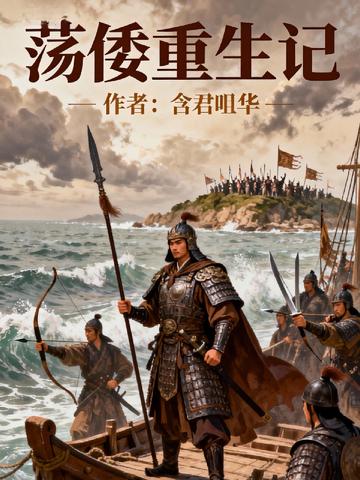
In the second year of Xiangxing under the Southern Song, the waters off Yashan ran red with blood. Lu Guanghua, leader of the loyalist forces, was gravely wounded. He watched as Lu Xiufu leapt into the sea with the emperor and a hundred thousand soldiers and civilians sacrificed themselves for the nation. Amid the raging flames, he lost consciousness.
Yet the bloodline of Huaxia was not extinguished, nor was the flame of its civilization put out. Lu Guanghua gathered the scattered Song forces and rebuilt their home among the countless islands of the East China Sea. Taking the Song system as their foundation, they established schools, taught Confucianism, and trained for war, planting the shattered embers of civilization deep among the waves. In those days, Japanese pirates ran rampant, colluding with remnants of the Yuan and ravaging sea trade routes while slaughtering coastal residents.
Holding fast to the belief that “the attire and traditions of the Han must not be abandoned, and the rightful line of Huaxia must not perish,” Lu Guanghua formed the “Pacify the Seas Loyalist Army.” They built warships, developed firearms, and established coastal defenses. Along the way, he met Yuzhen'er, a princess descended from Ryukyuan refugees. He also allied with Goryeo patriots resisting the Yuan and a seafaring family from Champa, building a network of resistance against the pirates across the seas.
The story follows Lu Guanghua and his forces as they sweep away the pirates and reclaim thirty-six islands. Woven through it are his sincere, cross-cultural romance with Yuzhen'er, his confrontation with the Yuan navy, and the islanders' shared prosperity. While reclaiming the islands, they uncover traces of the blending of Huaxia civilization. In the decisive battle, Lu Guanghua grasps the truth that “war ends at the hands of the benevolent, and the seas grow calm when hearts unite.”
Across two hundred chapters and thirty years, the book uses the vast East China Sea as its canvas to paint a sweeping portrait of a civilization that, though shattered, endures, and though scattered, reunites. At the end, Lu Guanghua raises the “Monument to Eternal Peace” in the Ryukyu Strait, inscribing it in the scripts of a hundred peoples: “Though sea and sky stretch wide, we share the moon of Han and Tang; though blades and war are fierce, they cannot sever the vein of civilization.” The words express the grand theme that Chinese civilization surges on like the tides of the East China Sea, ever renewing itself, while the peoples of its neighboring lands, like countless rivers flowing into the sea, ultimately become one family.



China's thousands of years of culture has infiltrated this land and does not allow outsiders to occupy it. It also uses this thousands of years of civilization to nurture and assimilate foreign races.