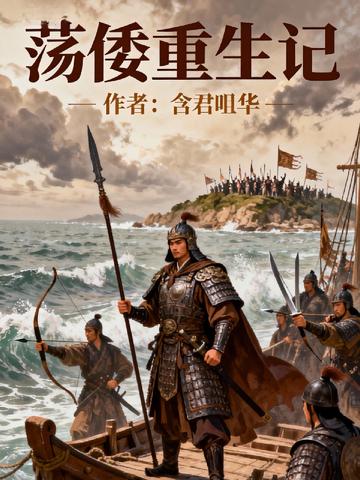
In the second year of Xiangxing in the Southern Song Dynasty, the waters of Yashan were stained with blood. The leader of the rebel army, Lu Guanghua, was seriously injured. He saw Lu Xiufu carrying the emperor and crossing the sea. One hundred thousand soldiers and civilians died for the country and passed out in the raging flames.
However, the blood of China has not been extinguished, and the fire of civilization will never be extinguished. Lu Guanghua gathered and defeated the Song army and rebuilt his home on the islands in the East China Sea. Based on the Song system, they established schools, taught Confucianism, and practiced martial arts, planting the broken fire of civilization deep among the waves. At that time, Japanese pirates were rampant and colluded with the scum of the Yuan Dynasty to wreak havoc on maritime trade routes and massacre coastal people.
Lu Guanghua, with the idea that "the clothes of the Han family must not be discarded, and the Chinese orthodoxy must not be destroyed", he formed the "Zhenhai Rebel Army" to build warships, develop firearms, and build coastal defenses. During this period, he got acquainted with Ok Jin-ah, the princess of Ryukyu survivors; he also formed an alliance with Goryeo anti-Yuan warriors and a Champa navigation family, forming a cross-sea anti-Japanese network.
The story focuses on Lu Guanghua leading his troops to defeat the Japanese pirates and regain the Thirty-six Islands, interspersed with his sincere inter-ethnic relationship with Yu Zhen'er, his confrontation with the Yuan Dynasty navy, and his symbiosis and co-prosperity with the people of all ethnic groups on the island. When regaining the islands, we discovered the relics of the integration of Chinese civilization; during the decisive battle, we realized the true meaning of "Swordsmen stop at the benevolent, and sea waves calm down at the same heart."
The book has two hundred chapters, spanning thirty years, and uses the vast East China Sea as a picture scroll to paint a long scroll of civilization that is fragmented but not destroyed, scattered and reunited. In the end, Lu Guanghua erected the "Eternal Peace Monument" in the Ryukyu Strait, engraved with the characters of hundreds of ethnic groups, and wrote the words "Although the sea and sky are vast, we share the moon of the Han and Tang Dynasties; although the swords are fierce, it is difficult to break the line of civilization." It reveals that Chinese civilization is like the tide of the East Sea, and is endless; the surrounding ethnic groups are like hundreds of rivers returning to the sea, and finally become one family.
Reader comments
China's thousands of years of culture has infiltrated this land and does not allow outsiders to occupy it. It also uses this thousands of years of civilization to nurture and assimilate foreign races.
China's thousands of years of culture has infiltrated this land and does not allow outsiders to occupy it. It also uses this thousands of years of civilization to nurture and assimilate foreign races.