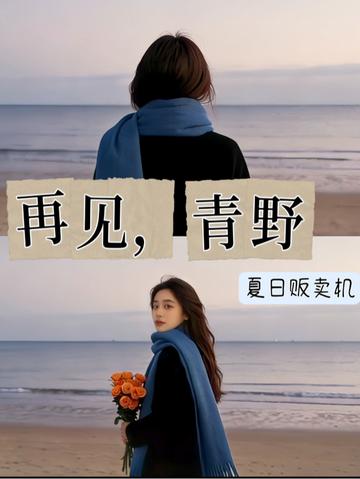
Her name was Wen Qingye, and she lived up to it: before she turned seventeen, “well-behaved” was practically synonymous with her name. She was adept at dealing with the aftermath of her mother's breakdowns, swallowing every question about her absent father, and maintaining an impeccable calm at school. Her misfortune was not illness, but becoming the guardian of her own family far too young, and living with a huge secret that everyone kept quiet about, yet permeated every inch of the air.
She thought life meant silently bearing this burden to the very end.
Then Gu Lin appeared. He didn't arrive with the radiance of a savior, but with an unsettling ability to see right through her. He could see the tension beneath her perfect smile, and when she tried to cover up her family's wounds with a well-intentioned lie, he calmly asked, “Wen Qingye, are you tired?”
He became an unorthodox point of reference in her murky world. But just as Qingye began trying to pry open the shell that confined her, the secret holding up the facade of her family was suddenly exposed, throwing her into the eye of the storm. Her mother completely broke down, rumors cut like knives, and Gu Lin, who had always been her “accomplice” and “guide,” had a reason he had to leave.
This time, there was no one to lean on.
Standing amid the ruins of her life, she finally saw clearly: neither her mother's sorrow, nor Gu Lin's influence, nor the gazes of the outside world could define who she was. She had to carry out a silent rebellion on her own, not against her family, but against the self that had been tamed by misfortune for far too long and had grown used to curling in on herself.
In the end, she set that wilderness ablaze with her own hands. The flames soared into the sky, illuminating not her scars, but the wild, untamed shape of the life that belonged to her.