**
- Status
- Ongoing
- Length
- 927k Words
- Genre
- Historical
- Subgenre
- Historical & Ancient
- Audience
- Male
- Updated
- 3mo ago
- Source
- Fanqie
Stats
Synopsis
Reader comments
In booklists 15
Male Apprentice and Female Master, the Master Is Possessive
I want to read a book similar to "The Traitor Has Many Beauties: Master Gao Leng Turns Dark". In the early stage, the male protagonist was kept by the master. After he left, he had a lot of beauties. After the master found out about it, he got him back.

Shocked, Tomato Actually Has Novels That Are Not Free
Tomato's Longest Novel
Tomato's longest novel
The Protagonist Plots to Conquer the World, Has a High IQ, and Is Similar to a Military Strategist.
Ever since I watched "Following the Waves", I can't forget it for a long time. I really like the feeling of the protagonist Jiang Jiangzhe plotting to take over the world. Does anyone know of any similar novels? I beg you.
I Want to Watch Traditional Culture, Not Gossip Dramas
I'm Looking for a Culturally Literate Story and a Novel That Takes Stock of History.
After watching a lot of short videos on Tomato, I learned about history and started writing novels. Many of them not only regard novels and TV series as official history, but even the contents of marketing accounts can be regarded as official history. Please ask for someone with a higher level of education, not some charming ancestors, and an objective view of the Yuan and Qing Dynasties.
Historical Category: Official Historical Novels
Historical novels are official history, not unofficial history. No matter which dynasty it is, the main thing is that it must be official history! Official history! Official history! Please, history is very useful to me.
Asking for Mutual Reviews of New Books
I want to read a book similar to "Six Paths of Martial Saint". Let's review each other's new books, Taoist friends, one person is five stars, there are a thousand, come on
Books That Reflect Real History
I want to read a book similar to "A set of books to read through the Three Kingdoms (7 volumes in total)". I want to read history books that reflect real history without excessive artistic processing. Excessive distortion of facts not only makes reading meaningless, but also distorts values.
History, Literature, Well-Written Novels
If you want a historical or literary novel, you can also write a novel with good writing style. Anyway, don't read it carelessly and keep your three views correct.
New Book for Newcomers, No Need for More Than 3,000 People to Read It
I want to read a book similar to "Time Travel: Conan and the Mechanical Cat".
New Authors Comment on Each Other and Give Each Other Pointers. I Don't Have a Book, so I Want to Take This Book with Me Everywhere.
I want to read a book similar to "The Fifteen Realms of Tiandu".
New Book, Mutual Review
I Need a Lot of Peer Review, High Quality!
I want to see content similar to "There is no such thing as the most stubborn one, only the more stubborn ones".
Mutual Review of New Books,
I want to read a book similar to "Eighteen Needles of the Phantom in the Valley of the Medicine King". Mutual review of new books, reply if necessary, listen to the book for more than thirty minutes, add to the bookshelf, five-star praise,
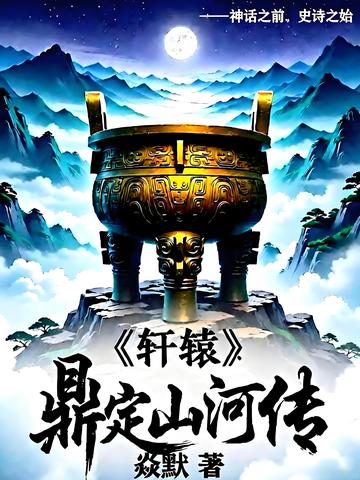
Jiuding controls the mountains and rivers, and blood builds China! "Xuanyuan: The Legend of Dingding Mountains and Rivers", an ancient epic that allows you to understand the soul of Yanhuang When the wild land is still trembling with the roar of ferocious beasts, and when the war between tribes is burning all over the Central Plains, "Xuanyuan: The Legend of the Dingding Mountains and Rivers" uses a Xuanyuan sword and a bronze tripod to split the fog of ancient myths and write the legend of Xuanyuan, the founder of humanities, into a heart-stirring Chinese epic! The most poignant thing about this book is that it does not portray Xuanyuan as a lofty "god", but as a "person" of flesh and blood who dares to shoulder responsibilities. You can see his bravery when he was a boy, fighting a black bear with his bare hands to protect his tribe; you can see his willingness to put aside personal grudges in order to quell tribal disputes when he formed an alliance with Emperor Yan; you can even see his resourcefulness in facing Chi You's copper-headed iron arms and the evil magic of demons and demons, to guide the car to identify the direction and to solve the puzzle with the Bagua array. On the battlefield, he is an iron-blooded leader who wields his sword to kill the enemy; in the camp, he is an ordinary man who misses his homeland while listening to the music of Ling Lun - this blend of "divinity" and "humanity" makes every fight and every decision particularly moving. The rhythm of the plot is even more exciting for readers who hit the mark! The thunderous strike of the Battle of Banquan, the desperate battle in the Wilderness of Zhuolu, the congratulations of heaven and earth when the Nine Cauldrons were cast, the highlight scenes come one after another, and there is no irritation in the whole process. But it is more than just "refreshing": Cangjie's joy when he carved the first words on a tortoise shell, Leizu's gentleness when he taught the people to raise silkworms and reel silk, and Dayu's persistence when he channeled floods. These sparks of civilization make "Dingding Mountains and Rivers" no longer a cold conquest, but a warm guardianship. When the territory of Kyushu is engraved on the bronze tripod, and when the flag of China is planted all over the Central Plains, you will suddenly understand: the so-called "descendants of Yan and Huang" are never empty words, but an inheritance engraved in the bones and blood. This is not a simple ancient novel, but a journey to find the roots of civilization spanning five thousand years. Open it and you will see the original appearance of Chinese civilization and how a group of ancestors bloomed the flowers of civilization in the wilderness. Whether you are a reader who likes bloody battlefields, strategic games, or readers who prefer myths and legends, and feelings about family and country, you can find your own ignition point in this book!
"Xuanyuan: The Legend of Dingshanhe" is an epic work with a grand layout and far-reaching ideas! The author takes "Yellow Emperor Zhu Yi" as the spiritual core, but unfolds a modern narrative that far exceeds the mythological dimension. The book contains not only magnificent war scenes and changes in mountains and rivers, but also delicate and profound speculations on the fate of characters and civilization, integrating technological innovation, cohesion of beliefs and construction of power. The writing is smooth, the plots are interlocking, and the IQs of all the members are online. It is both thrilling and exciting to read, and it also makes people think deeply about the origin and spirit of Chinese civilization. If you are looking for an original mythological masterpiece that is thick yet tense, classical yet full of modern echoes, this book is definitely a masterpiece not to be missed!
This novel takes the legend of "The Yellow Emperor Casting the Cauldron" as the anchor point, integrating myth tracing and civilization casting. It breaks away from the stereotyped narrative of "miracles coming from heaven" and focuses on "people's aspirations" and "civilization's self-forging". It uses the tripod casting project of Emperor Ji Xuanyuan to unfold an epic picture of technology, belief and power intertwined. Hard-core technical details and profound strategies are embedded in the majestic pattern, allowing the question of "how to become a god" to be grounded in the real historical texture. It not only deconstructs myths, but also reshapes the romance and weight of the origin of civilization. It is a masterpiece of new mythology with both imagination and historical texture!
The most intuitive feeling when reading this text is that it is thick but not dull; grand but not empty. The author's writing skills are quite sophisticated, and he can write about such a huge and boundless theme as "the birth of civilization" as clearly and palpably as the lines on bronze vessels. There is a sense of imagery between the lines, beacon fire, broken stone, blood writing, tripod body patterns, every sentence is as if carved, vigorous and powerful. What's even more rare is that under this heavy sense of history, one can also read a scalding temperature—that is, man's instinctive desire for order, survival, and "becoming one". The writing style is both epic and philosophical. You can't help but hold your breath while reading, as if you are experiencing the pain of creation from chaos to order along with the words. In short, this is more than just a paragraph of text, it is more like a bronze tripod cast by language. It is durable to read, durable, and can withstand the polishing of time.
"Xuanyuan: The Legend of the Dingding Mountains and Rivers" takes "Yellow Emperor Casting the Ding" as the spiritual anchor, smelting ethereal myths and profound civilization in one furnace. It abandons the cliché of "miracles coming from heaven" and instead digs into the power of "people's desires" and "civilization's self-forging". In the epic tripod-making of Emperor Ji Xuanyuan, it weaves a majestic picture of the intersection of technology, faith and power. The work not only contains hard-core technical details and profound strategies, but also roots the philosophy of "how to become a god" in the historical texture. It not only deconstructs myths, but also reshapes the romance and solidity of China's origins. This is a new mythological masterpiece with both imagination and historical texture, which is worthy of careful reading by every reader who has the soul of Yan and Huang in his heart!
This work breaks away from the inertial narrative of "the Yellow Emperor's ascension is the final chapter" and uses the tripod as the anchor to reconstruct the ancient legend. It is not limited to retelling myths, but asks "Where does the dragon go? Who made the tripod?" It combines the game of technology, the condensation of faith, and the tempering of power into one furnace. Watch Ji Xuanyuan forge mountains and rivers in troubled times, and witness the spiritual crowning of Chinese civilization in blood and fire. Under the epic strokes, the struggle of "human becoming a saint" is deeply intertwined with the self-shaping of civilization, which is a shocking spiritual deconstruction and reconstruction of ancient legends.
The novel integrates political wisdom and epic structure, and deeply depicts the Yellow Emperor's art of governance. From the dragon totem to institutional innovation, it is rich in details and profound in thought. The war scenes are grand, and the fate of the characters is intertwined with the changes of mountains and rivers. The language style is unique, balancing literariness and history, and providing a vivid carrier for cultural inheritance. Modern narrative techniques give new life to ancient legends and are an excellent window to understand the origins of China.
The layout and framework of the text are really great! The work takes the Yellow Emperor's casting of a tripod as a guide, unfolding a grand narrative that far exceeds the mythological dimension. It greatly sublimates the casting tripod into a civilized melting and casting project that integrates technological innovation, unity of belief and power game. Here, the dragon is not an auspicious sign from heaven, but a totem that brings all people home; the tripod is not a gift from God, but a realistic crystallization of system and culture. Through the perspective of Ji Xuanyuan, an emperor who has not yet ascended, the essence of becoming a god is deeply discussed. It is not about individual detachment, but about leading the tribe to complete the civilizational transition from dispersion to cohesion. The full text is magnificent, and in the burning luster of bronze, it rewrites the original code of the Chinese spirit. Strong thumbs up! [Laugh][laugh][laugh]
The most touching breakthrough in the book is that it breaks the inherent perception that "the Yellow Emperor is a god" and molds Ji Xuanyuan into a "human" with flesh and blood. He is not a saint who is born with a halo. When he was a boy, he would fight against ferocious beasts with bare hands to protect his tribe. He would be entangled in grievances and righteousness in tribal disputes. He would waver and struggle in the desperate situation of technical challenges and power games. This kind of "human nature" portrayal makes the image of the emperor take root - he has moments of loneliness and courage, has the world's pattern in mind, and also has hesitation in the face of choices. When readers follow his footsteps and watch him wield his sword to break the situation in the Battle of Banquan, use his wisdom to defeat demons in the wilderness of Zhuolu, and deal with the old forces in the court, they will understand that the so-called "divine nature" is nothing but the sublimation of human righteousness and tenacity.
Xuanyuan cast the tripod and Jiuzhou was initially established, establishing the spiritual totem of the Chinese nation. With delicate writing and tortuous stories, the book reproduces the magical process of China's unification. It's an exciting read, a great book.
This is a super beautiful and excellent work, and I highly recommend it with five stars. Good sense of language and extremely comfortable; The plot is good and very vivid; Good character, distinct personality. In particular, the story structure is precise, interlocking and watertight. Since there is a lot going on at the end of the year, I'm sorry, I'll just comment once and I'll continue to follow up.
The most valuable thing about this novel is that it restores "myth" into "human epic". It is not satisfied with retelling the legend of the Yellow Emperor's casting of the tripod, but asks what happened in that moment that was deified by later generations. Ji Xuanyuan in the story is not an emperor who was born as a god, but a man who, step by step, forged the human heart and the world into a cauldron in blood and fire, beside the boiling furnace of copper juice. The tripod here is no longer a god-given artifact, but a testimony of the self-made civilization. The author uses a triple melting pot - technology, faith, and power - to support the skeleton of the entire narrative, allowing readers to see that the so-called "becoming a god" is nothing more than a person who, at the juncture of history, tried his best to carry the weight of the entire era. This is not a myth, this is the truth about "how to become a god" that is more moving than the myth. When future generations look up at the cauldron, what this novel reminds us of is the sweaty man under the cauldron. A truly historical fable worthy of careful reading by everyone who asks "where do we come from?"
"Xuanyuan: The Legend of the Dingding Mountains and Rivers" breaks out of the mythical filter and restores "The Yellow Emperor's Casting of the Dingding" into a quenching of civilization. Yan Mo uses his majestic writing power to describe Ji Xuanyuan's struggle and courage to win hearts and forge faith in troubled times. The cauldron is not a gift from God, but a totem of civilization forged with blood and fire by thousands of ancestors; the dragon is not a descendant of heaven, but the backbone of China where people's hearts are gathered. It recasts the source of myth and allows us to see how a civilization completes the thrilling self-shaping between destruction and creation under the altar. The story is wonderful, keep following it!
As a profound lover of history and mythology, "Xuanyuan: The Legend of Dingding Mountains and Rivers" gave me an unprecedented reading shock. The author uses the "casting tripod" as the backbone and exquisitely weaves technical details, belief games, and power casting, making the epic epic both grand and realistic. What impressed me most was the portrayal of the Yellow Emperor - he was not only a leader who wielded his sword to determine the frontiers, but also a "person" who missed his homeland amidst the sound of music late at night. This blend of divinity and humanity makes every moment of the growth of civilization full of warmth. In addition to deconstructing legends, the novel also reconstructs the depth and romance of the source of the Chinese spirit. Every page echoes the deep resonance of the blood of the descendants of Yan and Huang. This is not only a story, but also a civilized pilgrimage.
Breaking the predetermined ending of "flying on a dragon" and reconstructing the epic with "people's hearts become dragons, civilizations forge themselves into cauldrons", it instantly hits the core of history. The most touching thing is the rich metaphor - the emperor melted copper to cast a tripod, but in fact it melted the troubled people's hearts and melted the character of civilization. The epic feeling of "from man to saint" is established at the beginning. There is no suspended mythical filter, only the forging of civilization in blood, fire and bravery. Just by reading the introduction, I can already imagine the foundation of China in the boiling copper juice. I can't wait to follow the update and see how this eternal chess game of casting a tripod will play out!
The writing is calm and atmospheric, the world view is tenable, and the characters are flesh and blood. From rising from humble beginnings to taking charge of the world and stabilizing the world, every step is written in a heart-wrenching way. The four words "Dingding Mountains and Rivers" are not only the title of the book, but also the soul of the entire novel. The more you read, the more interesting it becomes.
I really admire the author's choice of this subject matter and his skill in writing it. Characters from ancient legends slowly come towards us under the author's powerful pen, bringing supreme visual impact to the audience and readers. I've read it, five-star recommendation.
Breaking the cliché of flying on a dragon, reconstructing the myth with "people's hearts as dragons, civilization as a tripod", and using hard-core machinations and thick metaphors to create a Chinese epic with both imagination and historical texture. Worthy of five-star recommendation!
With the tripod cast by the Yellow Emperor as the bone and the human heart as the soul, we break away from traditional mythological narratives and re-explore the origin of Chinese civilization. It is no longer a destiny given by God, but a sacred heart forged by man. The copper is no longer the Jiuding, but also the fire of faith and civilization that unifies the world. Ji Xuanyuan's transformation from human to saint hides the most majestic original intention of the nation. It has a rich epic feel and is thrilling to read. I highly recommend this novel! It's very interesting to read, the details are getting richer and richer, and the plot is becoming more and more exciting. I highly recommend it. Keep reading for updates!
The author must be a knowledgeable person. He reorganized the prehistoric myths of Chinese civilization and combined them with Chinese history to write a soul-stirring mythological epic. The writing style is superb and the layout is grand. You can learn a lot while reading the book. I must recommend it with five stars.
A very beautiful novel that combines myths and legends. The author's writing is smooth and the descriptions are delicate. The story concept is novel and the suspense foreshadowing is cleverly designed, making people full of expectations for the protagonist's rise to the top. The characters in the book are even more vivid and three-dimensional, and both individuals and group portraits are vividly described, showing the author's strong writing skills. This is a masterpiece worth collecting and reading, and it's worth reading.
Taking "Yellow Emperor Casting a Cauldron" as a guide, it breaks away from the stereotype of retelling myths. The author cleverly reconstructs the "ding" from a god-given thing into an epic symbol of civilization's self-forging, with far-reaching intentions. The story unfolds in the triple melting pot of technology, faith and power. It depicts not only the sublimation of an emperor, but also the thrilling formation process of a civilization in blood, fire and creation. The writing is majestic and the conception is fantastic, injecting profound historical philosophy and majestic narrative tension into the ancient legend. It is an ambitious work worthy of careful reading.
A very passionate article, it made my blood boil. The author's writing style is good, calm and delicate, does not use rhetoric, does not deliberately sensationalize, and handles details such as environmental descriptions, psychological descriptions, movements and expressions accurately. A few strokes can heighten emotions and conceal clues, which not only serves the plot but also enhances the texture of the text.
Found a treasure! This ancient epic poem completely breaks out of the traditional framework of gods and emperors, and disassembles the legend of "Yellow Emperor Casting the Cauldron" into a story of civilization forging, power games and technological breakthroughs. The perspective is so novel. The author's depiction of the scenes and strategies of ancient times is very graphic. Ji Xuanyuan is not a born god, but an emperor who forges the chaotic world into a cauldron step by step. This setting of "human beings forge myths" is so irritating to me that I can't stop reading more!
This novel takes the legend of "The Yellow Emperor Casting the Cauldron" as the anchor point, integrating myth tracing and civilization casting. It breaks away from the stereotyped narrative of "miracles coming from heaven" and focuses on "people's aspirations" and "self-made civilization"
Very nice book! The subject matter is novel, and it incorporates familiar myths and legends. It is rich in details, interesting and beautiful. It is a good book worth reading. I give it a five-star rating and it is highly recommended.
Casting a tripod is not only a bronze vessel, but also a country and people's hearts. This work, which condenses the epic structure and political wisdom, uses solid technical details as its backbone and new mythology as its wings, outlining Ji Xuanyuan's path of sublimation from tribal leader to co-owner of China. Between the lines, there is the majesty and heat of the birth of civilization. [Like][Like][Like] The author's perspective is novel, based on historical facts, the conception is unique, the history is grand, the vision is broad, the writing is first-class, the characters are vivid and vivid, it is worth reading [Like][Like][Like]
The story describes the origin of myth, which is very innovative and allows people to see different myths. The story is very novel, the characters are vivid, and it is very beautiful!
Although this work is based on myth and legend, its thinking is completely modern. It asks not only "how did the Yellow Emperor become a god", but also "how does civilization become itself", "how does authority gain legitimacy", "how does collective identity form", which are fundamental questions throughout human history. In this sense, "The Yellow Emperor Never Goes" is not only a historical novel, but also a philosophical reflection on the construction of civilization.
This is the first time I read a novel with this theme. It integrates distant myths and legends into real life, and tells the art of emperors from the perspective of the Yellow Emperor. In short, the setting is novel, interesting and beautiful, and I can learn a lot of good things. It is a masterpiece worth reading [Like]