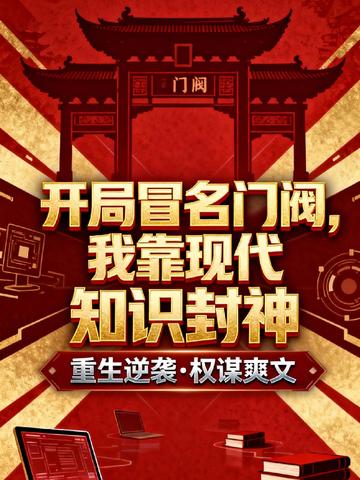
New Voices of Langya: From the Start, I Impersonate a Scion of a Great Clan and Become a Sage Through Modern Knowledge
Wang Yan opens his eyes to find himself a southern dynasty aristocrat on the run from pursuers.
Northern cavalry are on his heels, while the grand estates of the great clans loom behind him like cages.
To survive, he grits his teeth, picks up a bloodstained jade pendant, assumes another man's identity, and enters the “Great Wei Dynasty,” a realm obsessed with pedigree, Confucian classics, and refined debate.
Here, knowledge is the only power, and the classics are the supreme law.
And he, a transmigrator carrying an entire modern system of knowledge, becomes the greatest variable in this closed world.
While the gathered scholars spend their lives poring over the classics, he casually examines bamboo slips and uses logic and textual research to uncover truths that have been falsified for a thousand years;
while aristocratic clans monopolize the path to advancement, he establishes an academy and spreads the practical study of statecraft like a fire across the land;
when the authorities of traditional learning denounce him as a heretic, he stands before the emperor and uses his own ideas to challenge the prejudices of an entire age.
From an impostor scrabbling to survive to a pioneer entrusted with the torch of civilization.
The path Wang Yan intends to walk is not one of changing dynasties, but of composing a world-shaking New Voice of Langya for this ancient civilization, long buried in dust.
Highlights:
1. High-stakes intellectual battles: Using modern linguistics, logic, and textual scholarship to debate the classics and win in court and at literary gatherings, delivering the thrill of overwhelming others with knowledge.
2. A web of identity mysteries: His impostor identity hangs over him like the Sword of Damocles, as he exploits his information advantage to find a way through one perilous situation after another.
3. Rebuilding civilization: No cultivation, no runaway technology. The story focuses on intellectual reform in culture and institutions, showing how modern thinking can...