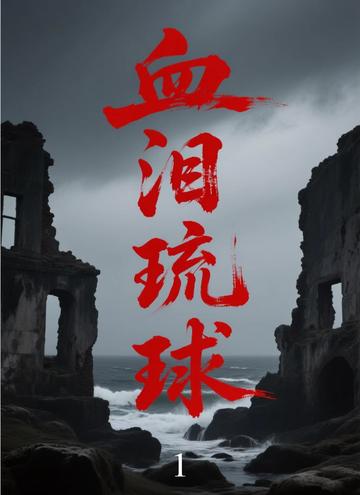
"Blood and Tears of Ryukyu" is a long historical novel based on Japan's annexation of Ryukyu (today's Okinawa) in 1879. The story begins with Japan's forced "abolition of Ryukyu and establishment of counties" in the fifth year of Guangxu's reign. Through the struggles of Ryukyu's last monarchs, nobles, and civilians, it shows the maritime kingdom's deep recognition of Chinese civilization for 500 years, as well as its journey of blood and tears when the country was subjugated.
The novel revolves around multiple clues such as the forced eviction of Ryukyu King Shang Tai, the loyal ministers Xiang Dehong and Lin Shigong and others who crossed the sea to seek help from the Qing Dynasty, and the secret resistance of local scholars and people. It includes the perseverance of the royal family in desperate situations, the responsibility of the Chinese nobles in Kume Village, the secret struggle of warriors and fishermen, and the tenacity and wisdom of women in the shadow of history.
Against the grand historical background, the work delicately describes the intertwining fate of individuals and their country: Lin Shigong shouldered a mission and went north to plead his love; his sister Lin Meier weaved an intelligence network in her boudoir; the veteran Mao Yunliang swore a bloody oath to refuse to take up false posts; the warrior Zheng Zhaoji joined forces with the martyrs; Fishermen risked their lives to open up sea lanes... At the same time, the Qing Dynasty's internal oscillation between "coastal defense" and "fortress defense", the weakness of negotiations with Japan, and the political calculation behind "island division and treaty modification" made Ryukyu's appeal for help become increasingly unlikely in the changing times.
"Blood and Tears of Ryukyu" is not only a tragic song about the subjugation of the country, but also an epic about cultural identity, loyalty and resistance. It interrogates the survival dignity of small and weak nations in history, examines the fate of civilization inherited under strong power, and writes with blood and tears the unquenchable Chinese fire on the East China Sea.