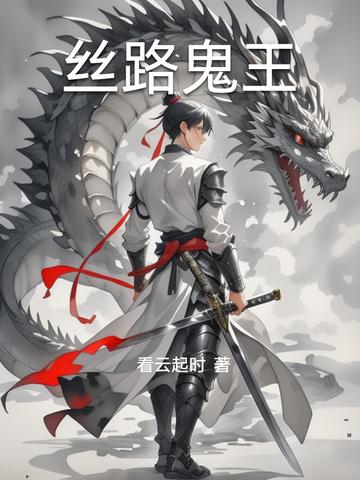
Beneath a solitary plume of smoke in the vast desert, the exiled boy Lu Zhao grips half of a bloodstained silk fragment. Behind him lies the burned-out relay station of his fallen homeland; before him stretches an endless wasteland of yellow sand. As nomadic cavalry trample the cities of the Central Plains, he glimpses hope among the camel bells of a Western Regions caravan: the “Map of the Western Regions’ Waterways” conceals a military lifeline capable of changing the course of history. Reborn with memories of his previous life and mastery of the Ghost Path, Lu Zhao travels from secret tunnels in the Dunhuang caves to the treasury of Samarkand. With one hand, he redraws the ten-thousand-mile trade routes; with the other, he cuts off enemy supply lines. Meanwhile, Princess Murong Xue, who died unjustly in her previous life, is reborn in the palace. She transforms from an innocent “white lotus” into a calculating “black lotus,” using her foreknowledge to lay out a game of revenge at court. Their two paths of vengeance converge along the Silk Road: one weaves a web of iron and blood from trade routes and the Ghost Path, while the other overturns the court with schemes and wisdom. When Lu Zhao’s caravan bells meet Murong Xue’s palace intrigues, they discover that the same hidden hand orchestrated the tragedy of their previous lives. After ten years of planning, their schemes erupt all at once. As war reaches the gates of Bianliang, the entire court is stunned to learn that the lowly interpreter sent into exile and the deposed princess have long since woven a net of revenge from trade routes and the Ghost Path, one that spans the entire north.