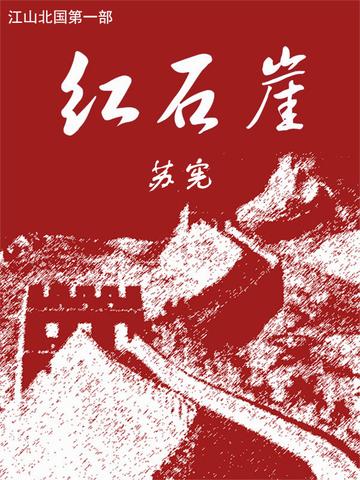
The novel is based on the anti-Japanese struggle life in the "Da Qingshan" area. First of all, this area is a gathering place for many ethnic groups, with Buddhism, Taoism, Islam, Catholicism and other religions present; secondly, the folk culture in this area is diverse, and the story is interspersed with scenes such as Mongolian songs and dances, Hetao folk songs, Jin opera, two-person stage, Western regions songs and dances, mountain climbing tunes, rural social fires; and then, this area is rich in historical sites and landscapes. , Including the Great Wall of Qin and Zhao, Zhaojun Tomb, Five Pagoda Temple, Medalizhao, Wusutuzhao, Langshan Mountain, Xi Agui Temple, Yinshan Rock Painting and other places; finally, this area has spectacular humanities and landforms, and the story scenes involve rural areas, cities, plains, mountains, grasslands, deserts, etc. The vast and magnificent northern scenery makes the ups and downs of the anti-Japanese struggle story more epic.
The novel is based on the deeds of real people and depicts more than ten main characters: Yu Beifei, Yun Feng (Meng), Su Baichen, Hong Bo, Bei Hongxun, Yun Fengguang (Meng), Lin Zefeng, Kuitai (Meng) Mongolia), Xiong Jianyi, Xie Wen'e, etc.; There are also the Japanese invaders Sangyuan, Asami, and Kono; the Japanese and puppet "government" Tuke and Fuyin Dalai; the die-hard Kuomintang figures Bai Jianhua, Zhang Xipei, etc.; The bandit Blind Eagle, etc.
Remember the martyrs and never forget the past! Through more than 20 years of studying historical materials, the author aims to construct the anti-Japanese epic of "Da Qingshan" from a new perspective, which is even more precious today.