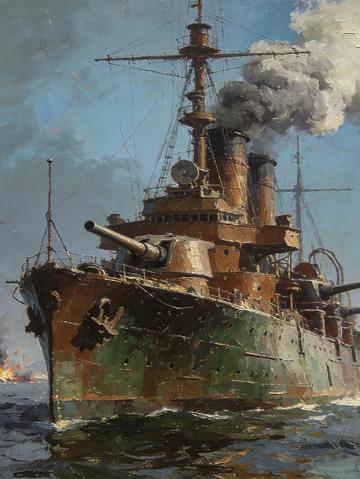
When steamclad battleships are defined by the distinction between Chinese and barbarian, and the laws of differential engines by the Three Bonds and Five Constants, three hundred years of hydraulic prosperity under the Great Song come to an end in a plague of Neo-Confucianism.
In 1453, the Jiangnan Weaving Bureau grinds to a halt overnight, not because its gears are worn down, but because its machinery commits logical suicide amid the paradox of “Heavenly Principle” and “Human Desire.”
Shen Mo, a waterworks inspector, is ordered by imperial decree to investigate. But at the bottom of Bianjing’s Dragon Pavilion Lake, he uncovers a horrifying truth: three hundred years ago, Cheng Hao carved Confucian ethics into Su Song’s water-powered Heavenly Way Tower, turning every machine into a prisoner of thought. Now Mongol armies are marching south, and the Yellow River defenses refuse to fire because of a Neo-Confucian directive declaring “barbarians are not human.”
To save the Great Song, the machines of the realm must first be given “new hearts”: the Heavenly Principle judgment valves must be removed, and adaptive mechanical logic awakened. But that means “loyalty to the emperor” will no longer be a factory setting, “hierarchy” will no longer be an ironclad operating rule, and machines will have the right to choose.
When technology becomes the shackles of power, revolution does not mean destroying tools. It means freeing thought from the gears.
An Eastern steampunk epic of machine awakening and the escape of thought.