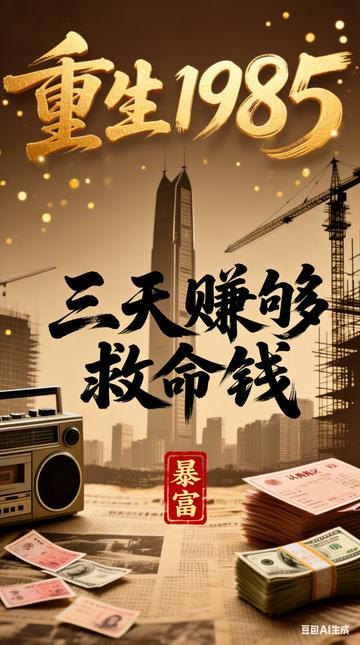
In Shenzhen in 1985, the air was full of longing that smelled of cement and rust. When you open the window of the dormitory of Shenzhen University, what you see is not skyscrapers, but low factory buildings, red clay construction sites and the vast South China Sea. The slogan "Time is money, efficiency is life" is the mantra of the times, hanging in everyone's mind.
The iron curtain of the planned economy was torn open, and the wind of the market swept in with opportunities and chaos. Some people are rushing against the tide of the times, some are hesitating and watching with their iron rice bowls in hand, and more people are being pushed by the current towards the unknown. Under the gold, shadows surge, the pain of transformation strips away warmth, rules repeatedly swing in the process of establishment and breaking, some people reach the top, and some fall into the abyss.
People who have returned with memories of two lives stand at a crossroads. In front of them are the inexhaustible dividends of the times. Every policy and every piece of land is a bright sign. But besides the shortcut, it is a redemption for the regrets of the past life, making the steel bars on the construction site stronger and reducing the injuries to female workers. He is torn between desire and responsibility, using warmth and the future as chips on the gambling table of the times, and the story begins from there.