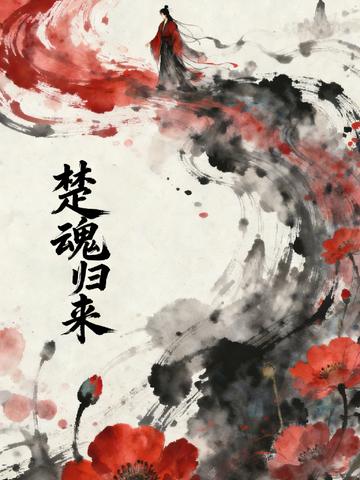
At the moment when Wujiang committed suicide, Xiang Yu, the overlord of Western Chu, thought this was the end of the chapter - but unexpectedly he opened his eyes and woke up to the modern Jiangdong a thousand years later.
The once golden warriors turned into urban neon lights, and Gaixia's tragic songs dispersed into the fireworks of the city. The figure that haunted him became the Wanxi lady in the works of Chu history researcher Yu Wan; and the old enemy Liu Bang actually also carried thousands of years of memories and became an "opponent" on the cultural and tourism track.
He is no longer an overlord who only knows how to fight, but the young master of the Xiang family who carries forward the inheritance of Chu culture: he builds an intangible heritage industrial park, protects the craftsmanship, and promotes the charm of Chu to the world; he and Yu Wan in the cultural and creative park have gone from cultural resonance to heart-to-heart connection, making up for the regrets of a thousand years ago; he and Liu Bang have gone from shopping mall games to shaking hands to make peace, so that the Chu River and Han world are no longer divided, but a symbiosis where "each has its own beauty."
When the descendants of Wu Zui walked across the river with the roar of the ink wind, when the Chu embroidery patterns and the Han brocade cloud patterns intertwined into a new chapter, when the unfinished things of the past were completed and became "consummation" in the fireworks of the new era - Xiang Yu finally understood that the real hegemony is never to dominate the world, but to guard the ones you love, protect the souls you cherish, and live a millennium of obsession into a long-lasting daily life.
This is the rebirth of the Overlord across thousands of years, a gentle continuation of the unfinished story, and the endless growth of cultural blood in time.