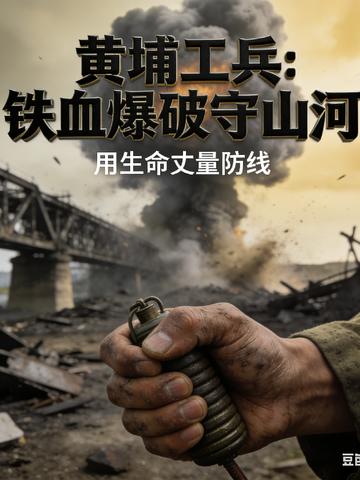
In the autumn of 1937, Shen Yanchen, a top student in the fifth phase of Huangpu's Engineering Department, became famous for his "precision blasting with maximum explosive dosage" during a blasting drill at the Luoyang branch. However, it coincided with the outbreak of the Pingxingguan Battle. With the oath of "building the Great Wall of China with the skills of Huangpu", he, the brave Lu Meng, the wise Su Wenxuan, and the tenacious female medical soldier Chen Yue went to the front line to use their engineering skills to challenge the Japanese elite on a battlefield with disparity in equipment.
From the mountain mine ambush at Pingxingguan to covering the relocation of his father's arsenal to Sichuan during the Battle of Wuhan, the arsenal blueprint that his father guarded with his life became the heaviest support for his family and country; the bombing of bridges behind enemy lines in the Battle of Zaoyi, and the layered blasting of bunkers in Songshan, Western Yunnan. With his engineering wisdom, he blasted a path to victory for his comrades in desperate situations. His comrades shed blood, his schoolmates betrayed him, and his mother was trapped in an enemy-occupied area. Tempered by the flames of war, the slightly idealistic young man transformed into a major commander who was decisive but compassionate.
He collaborated with the Eighth Route Army across camps, connected with overseas Huangpu alumni, and mobilized local militia groups. He used the military spirit of "love and sincerity" to gather strength; he protected technicians, rescued orphans, and exposed the atrocities of Japanese military germ warfare. He protected the safety of the country with an innocent heart. Every blast was precise and fierce, and every battle was hot-blooded. When the national flag was raised over the city, Shen Yanchen held the engineer shovel left behind by his father, looked at the recruits under his command, and vowed to shake the sky: "The soul of Huangpu will never be destroyed, and the mountains and rivers of China will not be lost!" This is an anti-Japanese war epic written with professional skills, and it is also a song of family and country forged by the iron blood and loyalty of Huangpu soldiers.