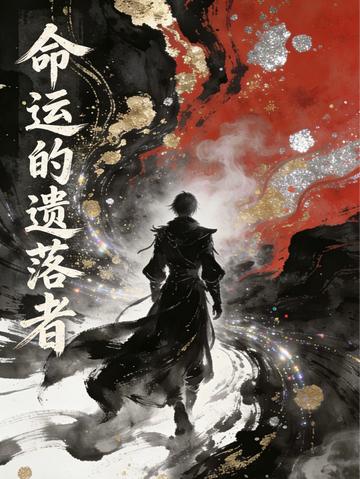
Some write fate. Some calculate it. He is the paradox of fate.
Eli was born a loophole in the world's rules. When he was certain to win a wager, a bird would fall through the roof. When he was on the verge of death, some absurd chance of survival would appear. The more certain something was, the more it would turn out the opposite way because of him. This passive curse kept him apart from the world, until he met Lillian, a naturalist whose eyes always reflected starlight, and discovered that he could "see" and "stir" the ripples of probability in other people's fates.
The first time he acted of his own accord, he shook the foundations of the empire.
The Octavia Empire was a magnificent tower built on "certainty." Herbert, the Chief Astrologer, had spent his entire life weaving a net of fate to ensure that all things followed their precise, predetermined paths. He saw Eli as "cosmic noise" that had to be erased, a deadly plague that could infect civilization and unravel reality.
Meanwhile, the mysterious "Collector" whispered from the shadows: Eli, you are no curse. You are a key, a key that can unlock sealed ancient truths and release infinite possibilities.
From tiny miracles in the streets and alleys to a war of probability sweeping the empire.
Eli's journey began in confusion and solitude, and ended in an epic struggle to reshape the rules of the world. He would learn to walk among countless branches of fate, be forced to choose between the survival and disappearance of those he loved, and ultimately discover the astonishing origin of his power: the ancient echo of an entire civilization that had willingly merged with a sea of probability in order to transcend certainty.
When Herbert activates the "Forge of Fate," seeking to permanently fix the futures of billions, Eli faces the ultimate sacrifice: to defeat absolute order, he may have to sacrifice