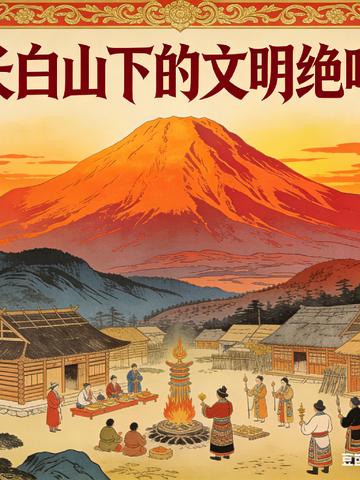
The legend of the Bohai Kingdom. When the remaining veins of Changbai Mountain stretch to Dongmu Mountain in Dunhua, there is actually a legend of the kingdom that has been dormant for thousands of years. In 696 AD, the Khitan cavalry broke through the tranquility of the northern border of the Tang Dynasty. Da Zuorong, the leader of the Mohe tribe in Sumo, looked at the dislocated figures of his tribe and resolutely marched eastward. In the vast sea of forests, they overcame thorns and obstacles, built a camp on Dongmu Mountain, and named it "Zhenguo". This new star of civilization in Northeast Asia lit up in the forest and snowy fields.
Seven years later, in 713, envoys from the Tang Dynasty traveled across thousands of mountains and rivers and brought the canonization edict. When the seal of "Bohai Commandery King" was handed over to Da Zuorong, tribal cheers resounded throughout the valley. In the next hundred years, the Bohai Kingdom entered a golden age: Longquan Mansion in Shangjing was built in the shape of Chang'an City. There were many pavilions on both sides of Zhuque Street. The palaces and palaces were majestic and not inferior to the atmosphere of the Central Plains. The Bohai Three Colors, with their warm glaze colors and exquisite patterns, accompanied the Tang envoys to Japan and became Treasures collected by nobles; Lucheng's rice has full grains and rich aroma, and is sent to the Tang court as tribute rice every year, becoming a delicacy in the royal family's meals; and with its unique geographical location, it controls the hub of the Silk Road in Northeast Asia, where silk, medicinal materials, and furs are distributed and traded.