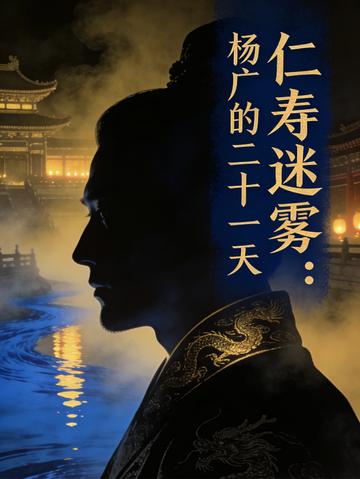
In July of the fourth year of Renshou, Emperor Wen of Sui Dynasty Yang Jian suddenly died in Renshou Palace. "Zi Zhi Tong Jian" Tie Bi Zhi writes "Prince Guang killed his father", but "Sui Shu" does not mention it at all. For thousands of years, the word "Yangdi" has become synonymous with tyrants - patricide, brother-killing, adulterous mother-in-law, and abuse of the people. It seems that all the sins are rolled into one.
But is history really like this?
On the rainy night when the historian stopped writing, a half-burned fragment of the daily notes quietly appeared, recording the real conversations that Emperor Wen had seven days before his death. The right concubine Zhang Heng, who was in charge of the imperial army, left a bloody letter in prison full of contradictions. The maid of Mrs. Xuanhua Chen revealed a subversive secret before she became a monk.
What if Yang Guang did not kill his father at all?
What if the Renshou Palace incident that changed Chinese history was a well-planned frame-up?
What if the king who opened the canal, created the imperial examination, and expanded the territory was deliberately smeared and turned into a devil?
The story begins on the tenth day of June in the fourth year of Renshou. Emperor Wen was seriously ill, and Prince Yang Guang was ordered to enter the palace to attend to his illness. Seven days later, it was suddenly reported in the palace that the prince was molesting Mrs. Xuanhua. Emperor Wen was furious and wanted to depose the prince. Three days later, Emperor Wen died and Yang Guang succeeded him. In just twenty-one days, the fate of the Sui Dynasty completely changed.
…